In part 1 Ansel shares his 2025 Alaska mountain goat hunt experience. He breaks down his seven day hunt in a thoughtful day-by-day narrative. Read Ansel’s Alaska Mountain Goat Hunt trip highlights and Part 2!
Kodiak on the Wing: 7 Days in Goat Country, by Ansel Chesney
Day 0: The Cluster
The initial departure from Anchorage to Kodiak was chaotic. The Anchorage airport had a system malfunction that required all passengers to check bags at baggage assistance. The line was going out the door of the airport upon our arrival. It is wise to plan a couple of extra hours in advance for contingencies!
Upon arrival in Kodiak, we met fellow hunters who had the same tags as us. We discussed potential hunting locations. We determined they were using a different air taxi service than us, with a later fly-out time. Hopefully, we’d have the first choice of alpine lakes to land on!
Day 1: Fog, Floatplanes and First Blood
In typical Kodiak fashion, a stubborn fog bank over the island. This meant our “8 a.m.” flight didn’t leave until 1 p.m. Our pilot kept us entertained with stories from 25,000 hours in the cockpit. This included flying Steven Seagal out to see bears without recognizing the Hollywood action star. Once airborne, we circled our original target lake, without any goats in sight; you can’t hunt goats that aren’t there! After flyovers of plan B and C lakes, we spotted a herd of over 20 goats spread across a mountain bow. To our dismay, we saw that another camp had already claimed a lake below the bowl. Fortunately, Rolan skillfully set us on a higher lake in the same drainage, to avoid disturbing our “competitions’” camp.
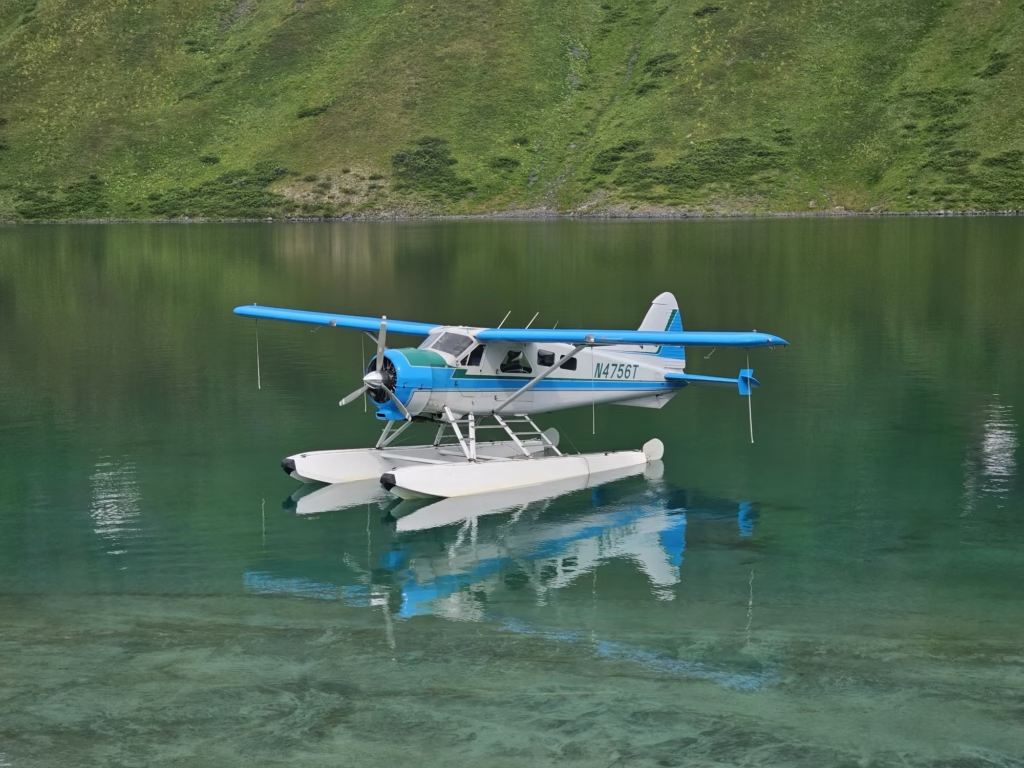
We unpacked the plane. The roar of the beaver’s radial engine subsided as Rolan flew down valley. Immediately, Eric glassed a few deer on the ridgeline. Not wasting a minute, Christophe and Eric went after the deer, armed with only a rifle and pocket knife. Deer are allowed to be pursued the same day as flying in Alaska. This is not the case for most large game species.
Sitka Blacktail Deer Down
I stayed back to set up camp to watch for non-existent bears. I did not want to spook the goats with thunderous booms from my .300 Winmag. A short while after I heard two shots in rapid succession, followed minutes later by a third.
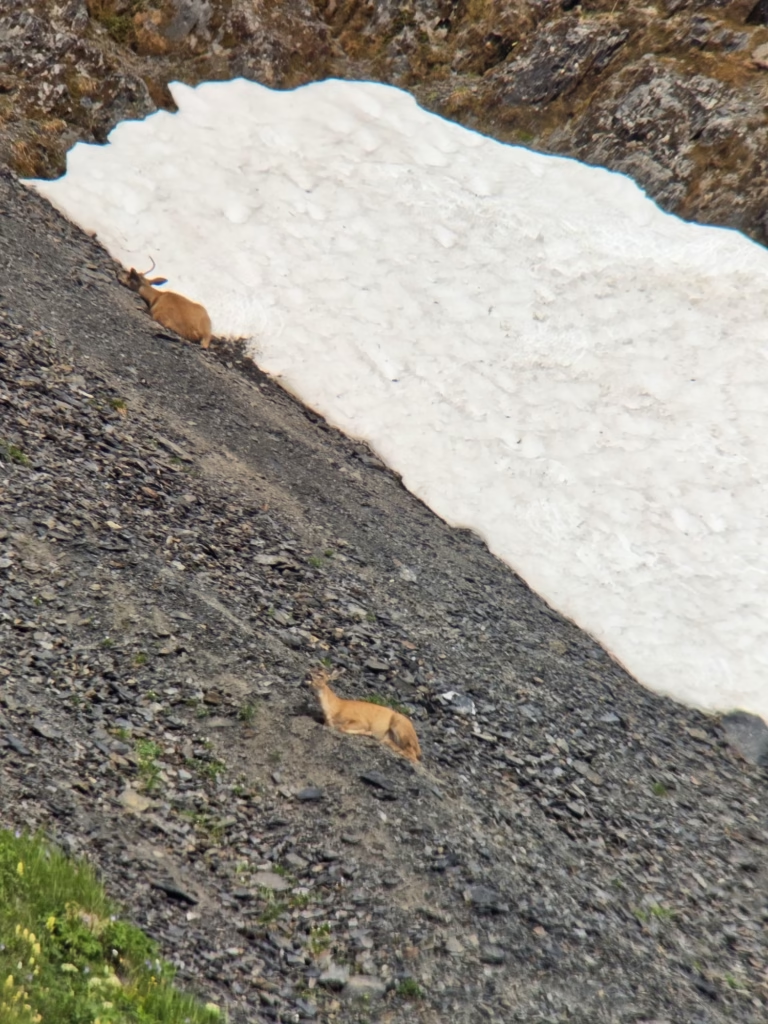
Eric reappeared in camp calmly informing me of two bucks down before retrieving packs and processing supplies. A few hours passed while I watched a bedded buck on the slope across the hill while setting up camp. As the sun dipped towards the horizon Eric returned with a fine 8-point buck (or a 3×3 with eye guards for you western hunters). Christophe returned with a spike.
Blacktail Deer Meat Cache
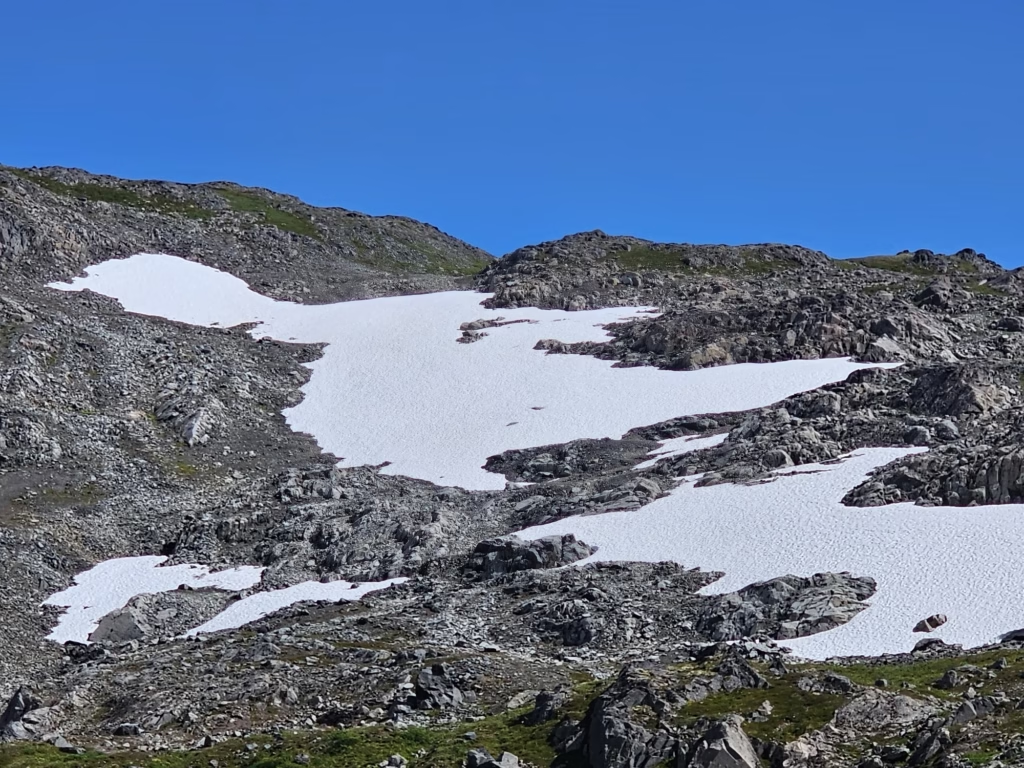
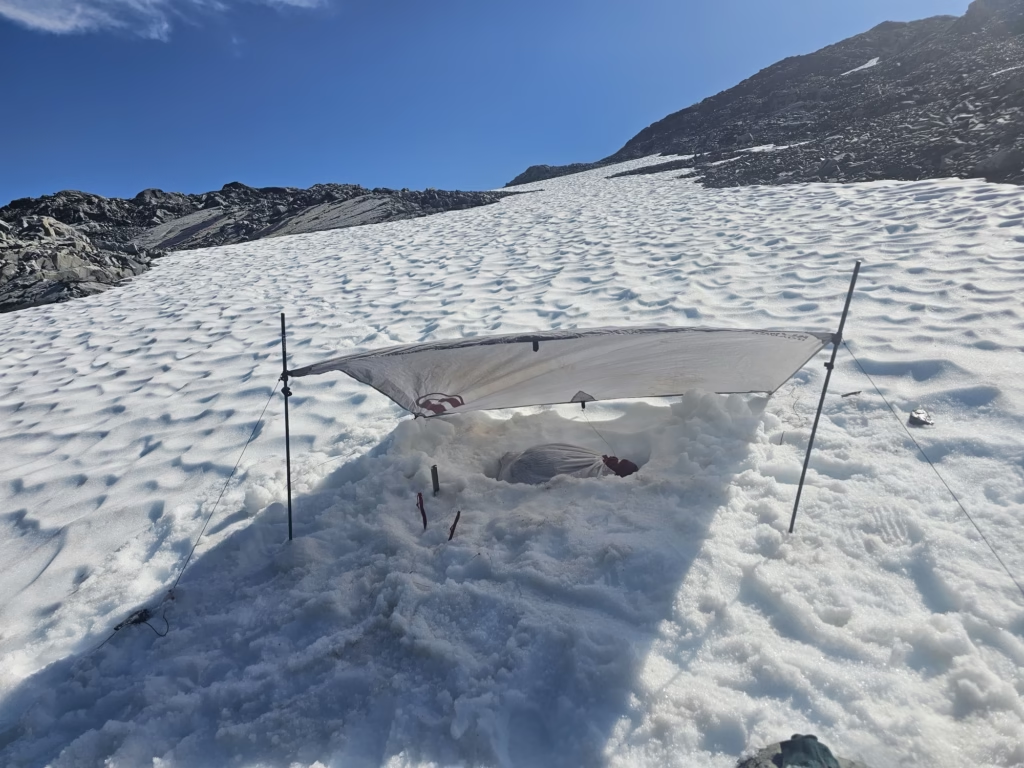
Conveniently, camp was situated less than a quarter mile below a snowfield. This proved a fortuitous amenity in the coming week’s hot weather. We wrapped the meat in plastic contractor bags and buried them in the toe of the snowfield – nature’s fridge. We did not anticipate how fast the snow would melt. This prompted much of our afternoons to be spent re-burying the meat higher up the snowfield.
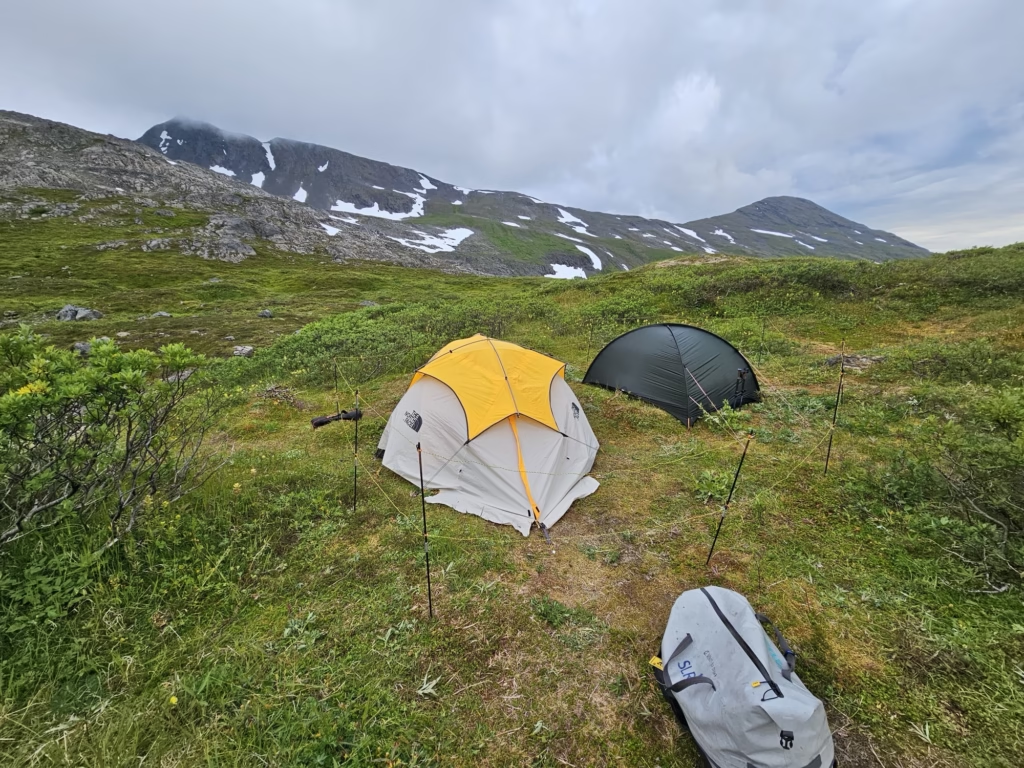
Despite our efforts to minimize scents at the meat cache, a clever fox took interest in a meat bag. It was fortunately dissuaded from further meat raids by Christophe’s “scent marking” around the cache… it pays to stay hydrated. That day, I saw a plethora of other smaller bucks along the slopes surrounding the lake. The goats we had spotted from the plane moved to the slopes across the lake in the evening. After hearing the stories from Eric and Christophe we finished tent and bear-fence set-up. Following dinner we crawled into our sleeping bags at midnight, eager with anticipation.
Day 2: Opening Day and a Buck for the Ages
Six a.m. came early, and we did not finish setting up camp until 10 a.m. due to the prior day’s adventures. Eric and I headed up the ridgeline with the goats to the northeast above our lake. Christophe went southeast to check out another valley.
Eric and I were in a prime position. We anticipated the goats to move to the grassy slopes overlooking camp. But we soon got an InReach message from Christophe. He had shot a huge buck and needed help.
He suggested that we take a route that looked doable on the map and was “shorter” than his original route. Eric and I sprinted down our mountain to climb over the ridge south of camp towards Christophe. It was the most treacherous hiking I have ever done to that point. Full of steep slopes, loose rock, slick vegetation, and absolutely no trail. It was typical Kodiak route-finding. Eric and I were in a pretty sour mood once we reached Christophe, but the sight of the biggest blacktail we’d seen in person quickly changed our moods.
Eric took all my gear and we split Christophe’s gear so that he and I could pack the quartered deer. Learning from our original route, we took Christophe’s long, but less treacherous return route back to camp. At camp, we ate dinner while glassing goats across the lake till it was dark out. We knew we were in for exciting events the following day.
Day 3: A Three-Legged Goat Chase
We started day three early with a quick breakfast. Christophe and I grabbed extra gear to prepare to bivy on the mountain in goat country. We ascended the ridge to our planned ambush point.
Meanwhile, Eric stayed back to enjoy some leisure after the 10 plus miles hiked yesterday. He wisely preferred to spend the night in the comforts of our camp rather than in a bivy setup.
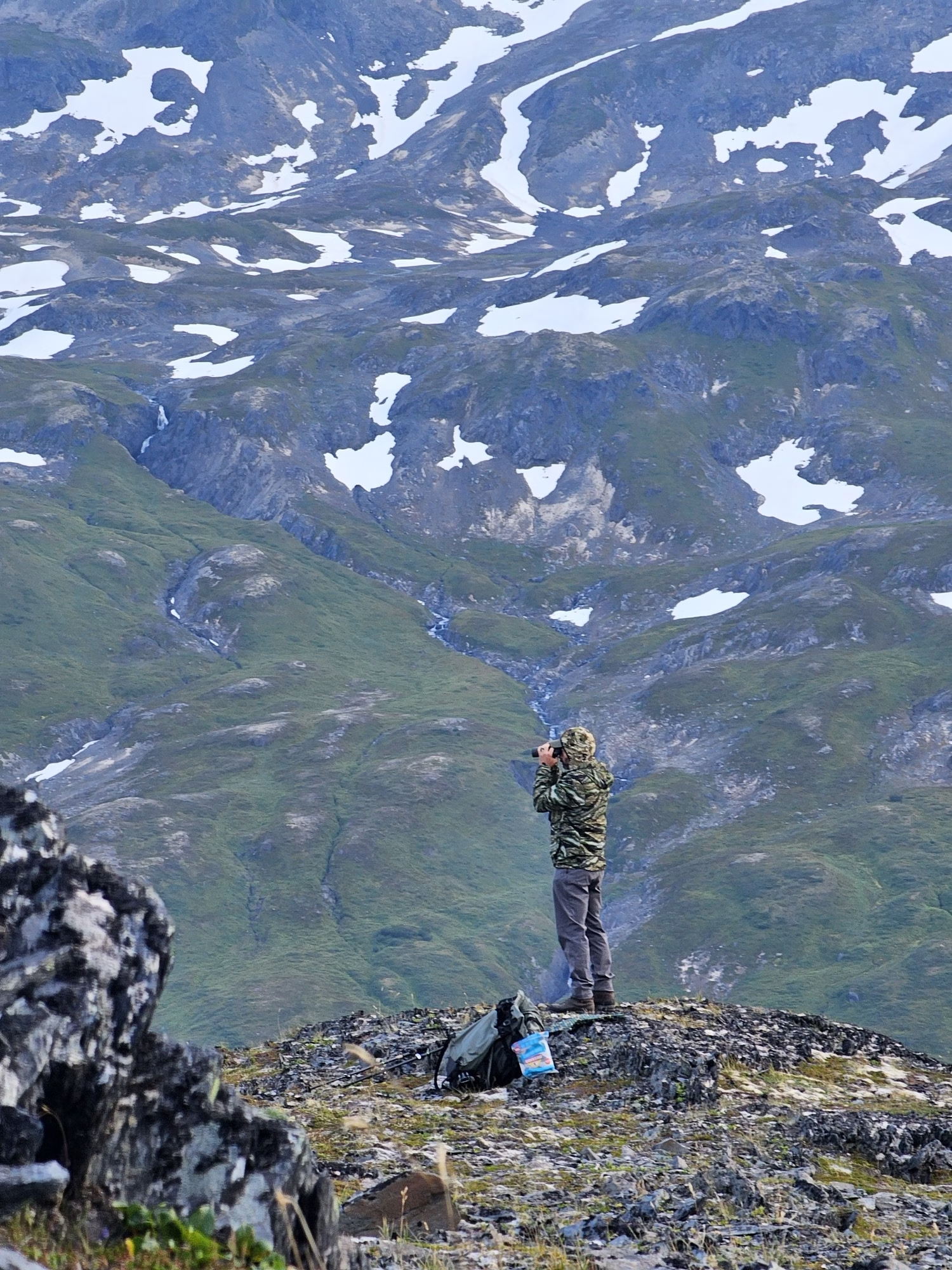
We hiked up the northeast ridgeline and glassed some goats. They were milling about three-quarters of a mile away, about a thousand feet higher in elevation. We saw two hunters presumably from the lower lake camp. We had seen it upon flying to our lake hiking the western edge of the ridge into the “goat bowl”.
We figured they would be trying to hunt the goats as they moved into the bowl. Trying to be courteous, we sat below the opposite side of the mountain ridgeline nearest to our lake and let the other hunters make their stalk.
A Three LEgged Billy
We dozed off and casually glassing for deer and goats. A couple of hours later two billies appeared on the mountain ridge from the hunter’s direction. They moved towards us before sprinting down the south face of the mountain.
One goat was visibly injured, bleeding from its right rear leg. Not wanting an injured animal to suffer, Christophe and I took off like madmen after the injured animal. In the rush we left all gear but our rifles and binoculars behind.
We glissaded, sliding down the steep grassy slope on our butts for over a thousand feet to the valley below. Once we got to the valley, we could no longer see the pair of billies. They had dropped into the alder-choked valley bottom.
Christophe headed down valley while I continued straight across. I spotted the goats about six hundred yards away. I descended through the alders, salmonberries, and cow parsnip, closing the distance to about 300 yards. The goats seemed to have stopped. It was difficult to settle for a shot as adrenaline coursed through my veins.
Right when I got the bipod legs out, I heard Christophe shoot from about 250 yards to the west. He had missed the injured billy, shooting from a shaky rest at a distance of 350 yards. The goats rapidly climbed another 150 yards and were out of reach.
A Three Legged Climber
Hoping the injured goat would slow down, I alder-whacked to the stream carving the valley. I then began ascending the other side below the goats. At this point, my adrenaline rush came crashing down, and I lost all my energy. About the same time, Christophe sent me an InReach message that he was heading back to camp.
The goats were still in sight, but there was no way I could keep up with even a three-legged billy. Man these animals are tough. I started back down the valley to the stream and began the three-and-a-half-mile hike back to camp. We were so low in the valley that it was another 750 feet of vertical just to reach camp.
Waiting on Billy
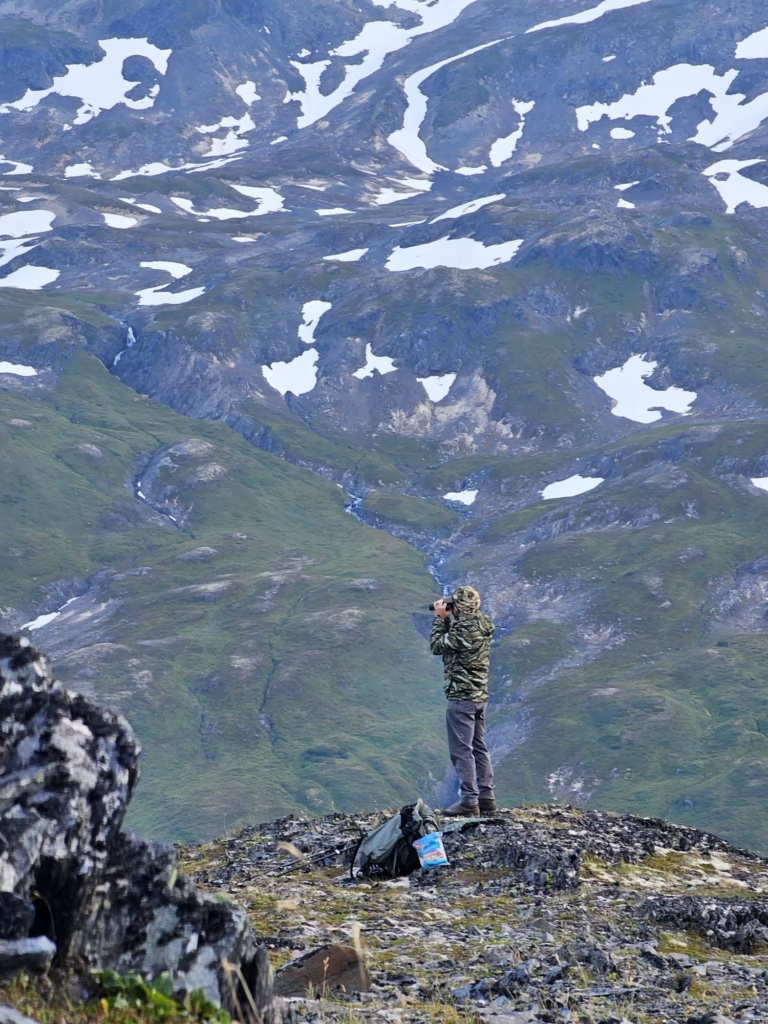
As soon as we reached camp, the main goat herd came over the top of the mountain in full view of where we originally were on the ridgeline . Christophe sprinted up the mountain. I was so exhausted that I needed lunch and a reinvigorating bath in the lake before my departure.
I hiked back up the mountain with my rifle and returned to our ambush site on eastern side of the ridgeline. After a while, the wind picked up and a thick mist and light rain coated us. After sweating profusely on the way up, I was now shivering, wet, and cold.
Luckily, we had brought up extra gear to bivy there that night. We sipped warm tea and miso while contemplating our next move. We expected that the goats were probably going to be completely thrown off their patterns by the day’s earlier events. We headed back to camp to have a restorative night’s sleep and figure out the next day’s plan of attack.
Within an hour of reaching camp, the goat herd moved to within a few hundred yards of our ambush spot on the ridgeline. We should have stayed put! After considering our options for the next day, we decided to hunt the known goat herd, rather than the two billies that we chased across our valley into the drainage south. With tangible excitement and high hopes for the next day, we went to bed with stomachs full of grilled venison backstrap.
Day 4: Doubling Down
Christophe and I woke up early and left right at first light. Eric expressed his desire to sleep in and hunt some tasty ptarmigan from camp. We ascended the thousand feet to the ridgeline ambush spot we had set up on the previous day. We arrived just before the fog started to roll in.
After a couple of hours and several hot beverages, the summer sun burned off the fog. We could see the grassy slope where we expected the goats would move to in the evening. The northeast wind was less than ideal. It could have put the goats cross-wind to us if they moved to the grassy slope. But as we soon learned, the hot summer day afternoon thermals would allow some very close encounters with goats.
We ascended the top of the ridge, following what we thought was a well-traveled goat path. We had to climb up using four points of contact. It is beyond me how these animals can effortlessly move up and down these steep cliffs. We ascended over a thousand feet. Finally, we reached the top of the ridgeline where we found a northeast wind with increasing up-slope thermals from both sides of the mountain. Given our position on the ridgeline, there was no way our scent could get to the goats.
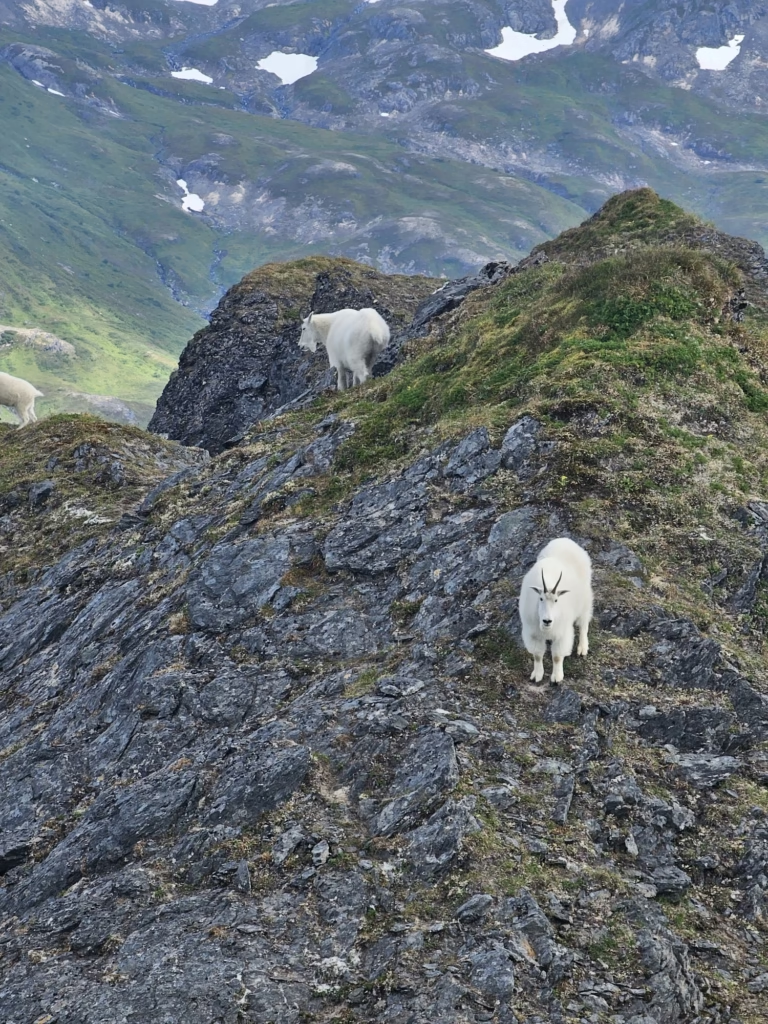
Goats back on Glass
We made our way along the ridge. There we spotted a nanny rolling in a volcanic ash patch in a bowl on the north side of the ridge. Kodiak frequently gets dusted with ash from the Katmai volcano. It erupted in the early 1900s and was the biggest eruption of that century.
After spotting the nanny, we noticed two younger billies on the same patch. With one tag each, Christophe and I hoped to double. However, it was nearing midday. Temperatures rapidly climbed as the sun shone into the bowl. In a surprisingly coordinated fashion, the goats roused from their beds meandering west toward the shade of the north face. Our shot opportunity missed by minutes, we hoped to catch them on the shade on the north side, knowing that we did not spook them.
We continued along the ridge to the peak overlooking the north face. We saw no patch of white anywhere. We consulted our map. It was apparent that the goats might be catching shade in a bowl to the west of our position. As we moved west, our hearts sunk when we spotted the two other hunters lying prone along a cliff bordering the edge of the shaded bowl holding the goats.
Hunter Courtesy
Not wanting to interfere with each other’s hunt for the remainder of the trip, we circled around the ridge to the hunters’ position. We let them know where the goat they injured (we presumed) was from the previous day. After discussing with the hunters, they expressed that they also had two tags, and each hunter had a rifle. They did not seem keen on chasing the injured billy, despite us informing them of the goat’s whereabouts.
Christophe and I made our way back to the ridge top overlooking the volcanic sand bowl where we first saw the nanny. We peered into the bowl. There we spotted a skylined, bedded nanny on a small outcrop to our west. A billy joined her and bedded at less than 100 yards from our position on the ridge line.
We could not shoot for fear the goats would plummet down an unseen face and be impossible to recover. Given the hunters below us to the west, we set up an ambush. We hoped the goats would come back across the sandy bowl to evade the hunters or follow their daily routine.
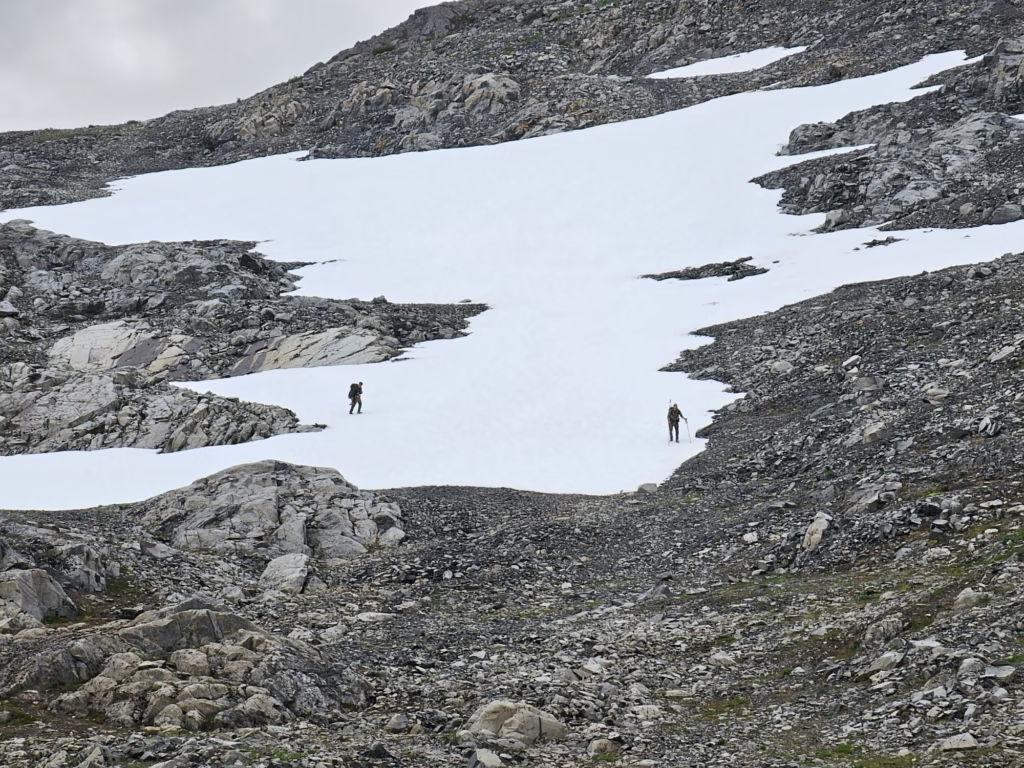
The opportunity
An hour or so passed. All of a sudden the nanny got up abruptly and went down the face into the sandy bowl. Then, the whole herd of goats came across the bowl at a trot. By this point, I was out of position and unable to take a shot.
Christophe was prone, looking down at the goat conga line proceeding below us and saw nannies and kids. However, I spotted a billy walking slowly in the back of the procession below our position on the ridgeline.
I signaled Christophe as much and adjusted myself to try and take a shot. Not seeing my billy, Christophe shot a billy trotting less than 70 yards below his position, hitting it high in the spine just behind the shoulders. Christophe’s shot from his suppressed 30-06 did not immediately startle the herd.
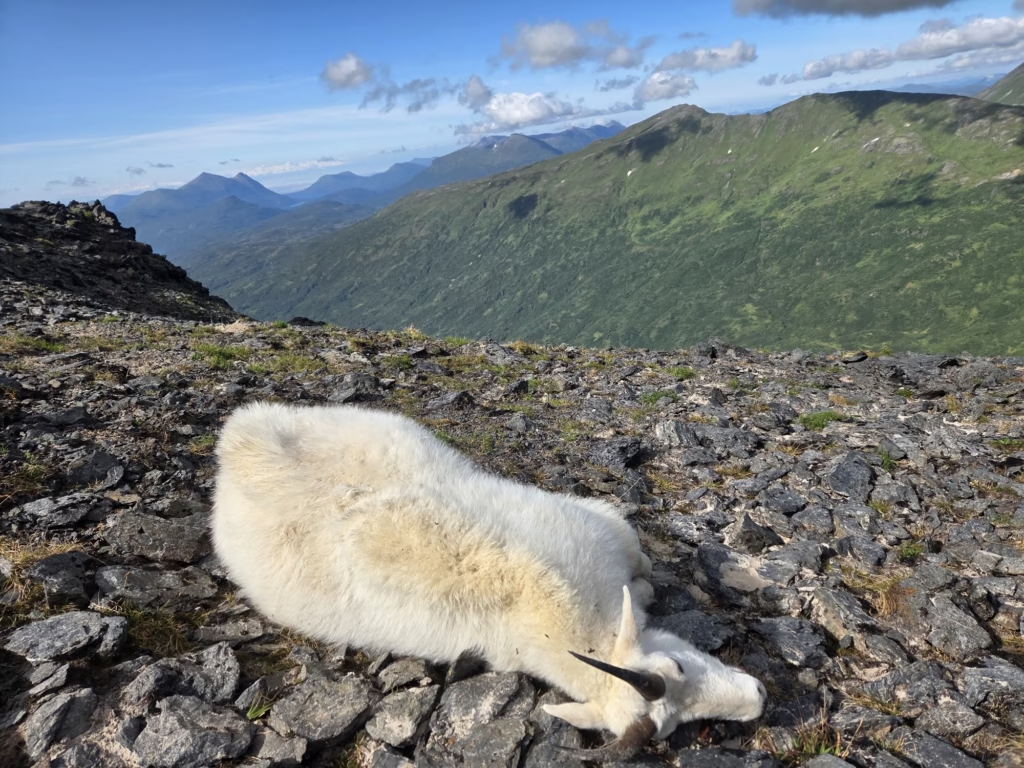
The injured billy, without use of its back legs propelled itself downslope toward a patch of snow and the steepening slope below. Christophe shot twice more. It was years of duck hunting and a well-placed leading shot that finished the animal instantly. The goat slid down to the toe of the snowfield stopping in a flatter scree patch.
One mountain goat down
Christophe and I experienced mixed emotions. Despite having downed a goat, the opportunity for me to harvest an animal appeared slim now that my booming magnum had sent them sprinting to the east. We gathered our shell casings and gear to make our way down to the dead billy. Christophe noticed that the goats had astonishingly begun to return along the ridgeline towards our position and were about six hundred yards away.
Leaving my pack behind, I grabbed my rifle and made my way down the ridge towards them, trying to stay out of sight. Sneaking two hundred yards closer, I popped my head over the ridge and stared straight into the eyes of a nanny looking at less than seventy-five yards. Slowly dropping to my belly, I was then perched in plain sight on the apex of the ridge. I painstakingly inched my rifle in front of me and into shooting position. I heard Christophe approximately forty yards behind me, knowing that the goat also had him pinned down.
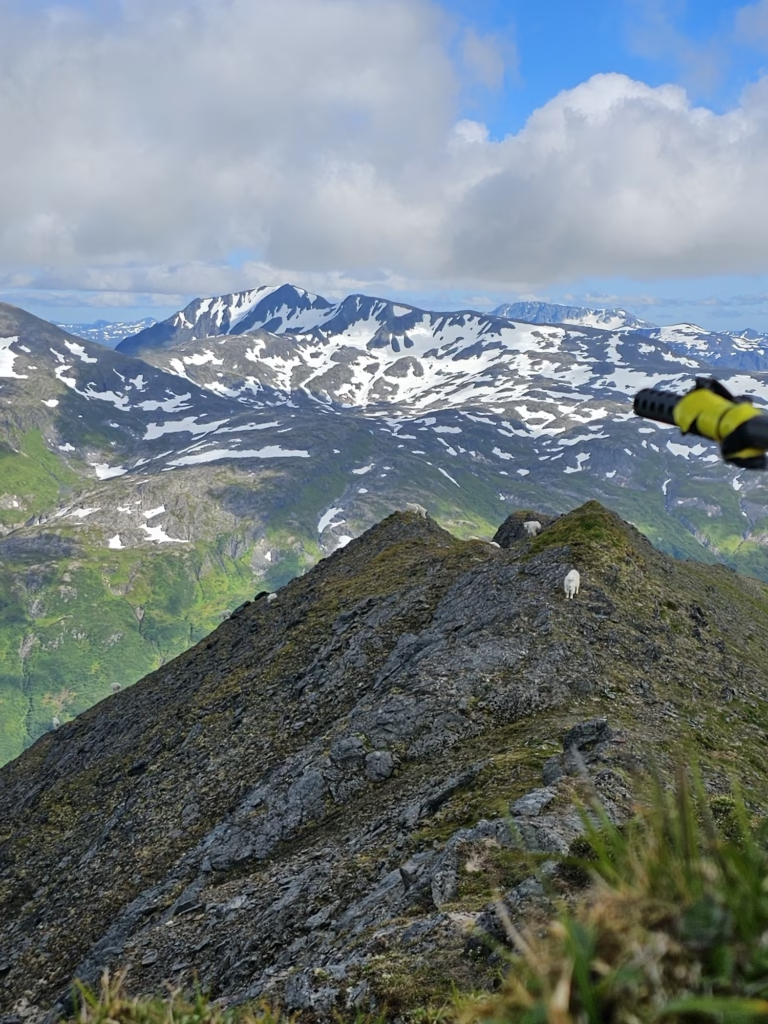
A second chance
Slowly, more goats filtered back west toward me on the ridge alongside the nanny, a likely herd matriarch. Scanning the herd, I could only see nannies, kids, and a lone three to four year old billy. While I was determined to shoot a billy (nannies were also legal), I hoped for a more mature animal. I laid motionless for approximately forty-five minutes, in a waiting game with the matriarch.
The other goats settled down and began feeding, roughhousing, sleeping, but that nanny stood there motionless like a sentinel. The young billy was just beginning to provide me with a broadside shot when another goat peaked over the horizon. It was a mature billy. Yes, I thought to myself, now just to wait a little longer for a shot opportunity.
Most of the goats were feeding and working their way back into the sandy bowl where Christophe’s goat lay. All did except the matriarch and mature billy. The billy stood there, head on facing the same direction as the nanny. He presented a potential frontal shot. But the billy was barely on the northside of the ridge, and might fall to the south side with a sheer cliff below.
a perfect shot
Finally, the billy slowly moved fifteen yards down slope and stopped to casually feed, presenting a seventy-seven yard broadside shot. My arms and shoulders were numb from supporting my weight behind my gun. I knew I likely would not get another opportunity.
I ensured I was aiming at the correct goat and that there were none behind him. I let out half a breath and slowly squeezed the trigger. It felt like a perfect shot…
More Alaska Mountain Goat hunt Reading
Read Ansel’s Alaska Mountain Goat Hunt trip highlights and Part 2!
Alaska Department of Fish and Game – Mountain Goat Hunting
2 responses
[…] Alaska DIY Trips Hunting Interviews ←Brain tanning and Fingerweaving with Kris Daman Alaskan Mountain Goat Hunt Part 1→ […]
[…] Part 2 Ansel continues his backcountry Kodiak Alaska Mountain Goat Hunt. Read Part 1 here and Alaska Mountain Goat Hunt highlights here. Thanks for […]