Imagine stepping into the forests of New York in 1776. No trail markers. No weather forecast. No headlamp. No GPS. No water filter.
Yet soldiers, scouts, hunters, indigenous peoples and frontier families routinely traveled, camped, hunted, and fought in these environments.
While technology has changed, many of the wilderness skills that carried Americans through the Revolution remain foundational to modern woodsmanship. These skills were critical to everyday life. They were survival and self reliance competencies – skills that determined whether an individual could exist on the landscape.
Here are ten wilderness skills essential to life during the American Revolution and what they can still teach us 250 years later.
1. Land Navigation
Land navigation was a critical though seemingly inherent part of life in the 18th Century. Although by the time of the Revolution much of the Colonies had developed road systems, wilderness travel remained an important facet of life in the growing colonies. The indigenous peoples of North America perhaps held mastery over the skillset. Euro-Americans in the 18th Century inherited a collective knowledge of trails, routes, and waterways that transcended from centuries of indigenous-Euro-American cultural exchange.
Traces were general routes or informal trails known on the American frontier, utilized by indigenous peoples and Euro-Americans for transit and trade. This network of traces was supplemented by a robust system of waterways in American Colonies that formed that backbone of intra-Colonial transit.
For the individual moving on the landscape awareness and navigation skills were essential. Natural navigation offered the foundation. Solar and celestial direction finding and terrain association offered people in the 18th Century the same navigational capacity as they do today.
18th Century magnetic compasses offered refined direction finding. Today’s orienteering-style compasses offer an evolution of these compasses that more readily accounts for magnetic declination.
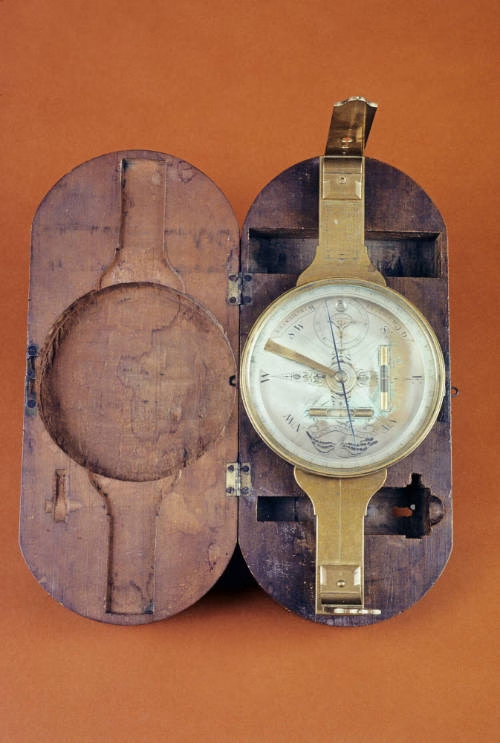
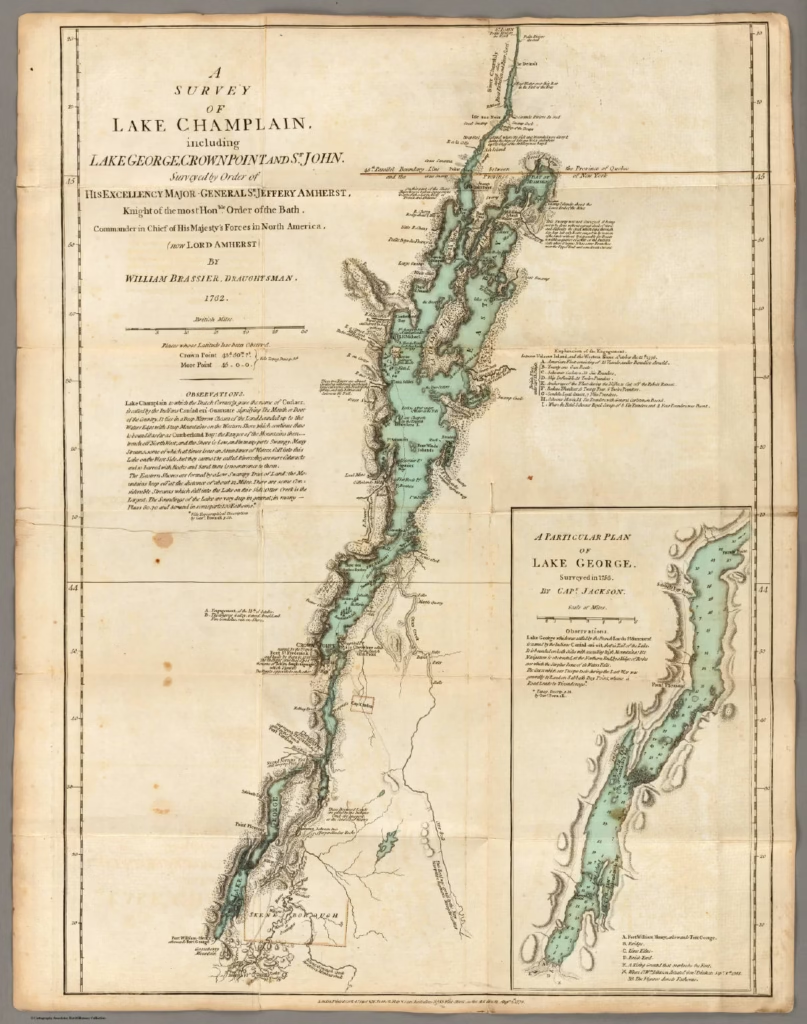
Map reading also proved an essential skill for traversing large tracts of land. Moreover, two reknown jobs on the 18th Century frontier included that of land surveyers and cartographers (map-makers). George Washington was himself a land surveyer as a young man prior to his military service
More than anything, land navigation in the 18th Century relied on awareness. Noting natural landmarks, terrain associating, and exchanging information with other humans on the landscape formed pillars of navigation that transcend to the modern day. While the modern GPS is a useful tool to 21st Century outdoorsmen, it cannot take the place of navigational knowledge. True land navigation requires the integration of tools, maps, terrain and awareness to enable the outdoorsman to traverse the landscape. Next time you venture into the outdoors consider focusing on analog and natural methods of navigation, and find yourself connecting with Revolutionary War history!
2. paddling and water navigation
In the 18th Century, North American waterways served as the highways of travel and commerce. Paddling and water navigation were essential skills relevant to a variety of peoples in the period. A variety of watercrafts frequented North American waterways, each requiring unique skill and experience. Typical watercrafts included canoes, rowable bateux, whaleboats and sailing vessels.
The indigenous canoes were a direct product of the environment, sourced from eastern woodland materials. Upon introduction to European settlers, the canoe became an integral part of backcountry transit. Indigenous peoples of the Eastern Woodlands (which encompassed most of the original 13 Colonies and parts of Canada) crafted canoes of birchbark and of “dug-out” trunks.
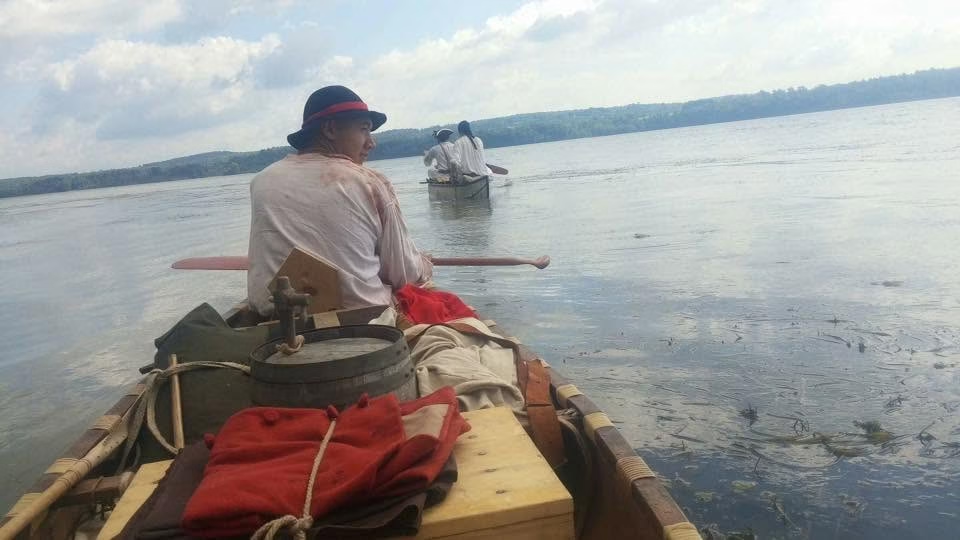
North American rivers and lakes also formed large enough waterways for other watercraft. Batteaux and whaleboats were workhorses of Anglo-American and French-Canadian water navigation. These boats were paddled by groups of men using oars and at times assisted by small sails. Larger watercraft also existed on freshwater waterways. Schooners, durham boats, and row galleys were some of the crafts that frequented large bodies like Lake Champlain and the St. Lawrence River.
Traversing waterways in North America required more than ability to operate a watercraft. Rather, individuals needed to possess the ability to read water, navigate, and portage. Before the creation of lock systems, many North American rivers posed intraversable obstacles in the form of steep waterfalls. Travelers in the Eastern Woodland backcountry needed to accurately navigate and anticipate these obstacles. Accordingly, portages were critical for bypassing known obstacles and connecting waterways.
Today, modern outdoorsmen can connect with history by traversing some of the same historic waterways as our forefathers. There is perhaps no better way to transcend into a wild past than to experience the Eastern Woodland backcountry via canoe or motorless boat. Next time you find yourself on the water consider the historic highway upon which you traverse. Perhaps plan a trip through a historic route and implement the same navigation skills critical to 18th Century peoples. You will not be disappointed!
3. Firecraft
Fire in the 18th Century was critical to daily life. Fires were the primary heat source for cooking, offered light around camps, provided warmth, and were critical to morale. The primary means of fire production in Revolutionary America was via flint and steel. This form of fire by spark relied on the combustion of a primary tinder. Notably, 18th Century peoples used flint and steel to ignite char into embers. Char was any natural material (often punk wood or cloth) that was baked to deprive the material of oxygen through pyrolysis, making the material highly combustible.
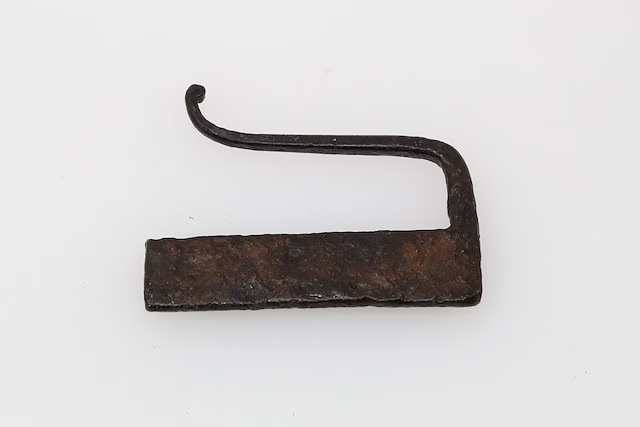
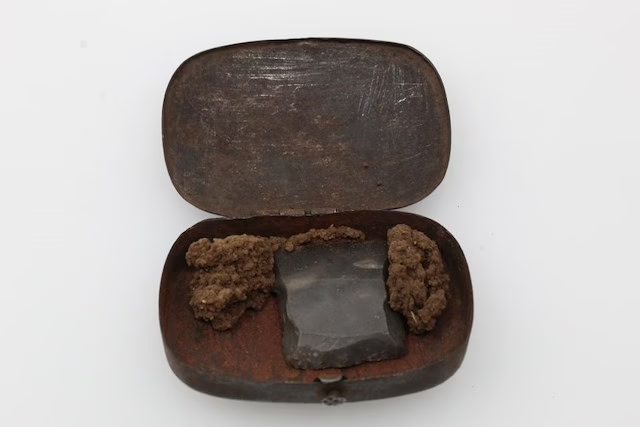
Another important firecraft skill in the 18th Century was re-igniting fires from old embers. Many base camps and homes maintained fires regularly. 18th Century peoples regularly reignited fires each morning by stoking old coals, introdoucing new tinder/kindling, and blowing air.
18th Century peoples also lit fires with magnified lenses utilizing the sun’s rays. In 18th Century cities scientists used burning glasses concentrated the sun’s light onto tinder to raise its temperature to the point of combustion. Meanwhile, on the American frontier small lenses were far less common than flint and steel due to cost.
4. Tracking and Reading Sign
In 18th Century America, tracking and reading animal sign were essential but inherent skills for survival. By the time of the American Revolution much of the American Colonies existed as part agrarian society. Nevertheless, in rural America animal tracking supported the hunting that supplemented an agrarian diet. On the American frontier and among indigenous communities tracking was an even more essential skillset. Animal tracking and sign reading supported not only immediate food procurement, but were critical skills to the Fur Trade economy.
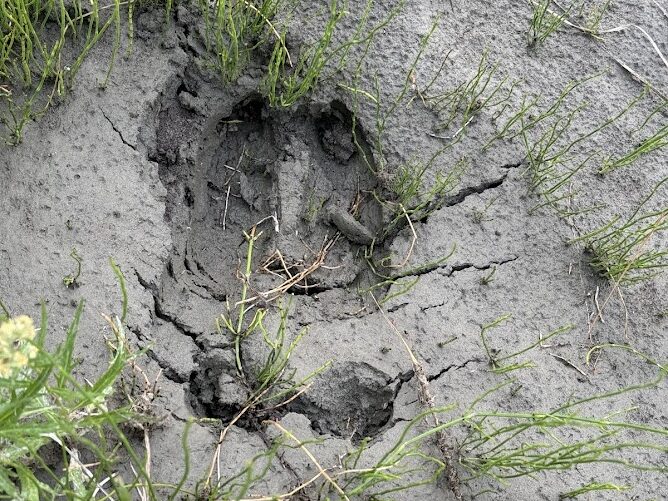
The American Revolution occured amid the broader Fur Trade era in which furbearing animals, most significantly beaver, were trapped and harvested for their pelts. These pelts famously made their way to Europe for conversion to garments (most notably beaver felt hats) in exchange for manufactured European goods. Tracking and trapping, therefore, are iconic skills considered with the American Frontier and interwoven into the fabric of numerous chapters of American history. Simultaneously, market hunting was a prevalent part of the Colonial economy. With this, wild game was hunted and sold to frontier settlements as a staple source of meat.
But tracking during the American Revolution went beyond supporting hunting and trapping. As the American Revolution raged across the 13 Colonies and parts of Canada, tracking supported distinct tactical military efforts. As the American backcountry formed one theater of operations, indigenous peoples and seasoned woodsmen supported both Patriot and British operations through scouting, ranging, and tracking. Some famous examples of tracking and scouting include the exploits of Butler’s Rangers, Francis Marion’s partisans, and Haudenosaunee warriors.
Today tracking and sign reading offers a gateway to connection with the natural world. The nuances of tracking offer insight into what exists on the landscape. More importantly tracking and sign reading offers clues as to what animals do on the landscape. The art of tracking is just as valuable today and perhaps more readily supplemented by a rich science. As you venture on your own tracking journey consider the ancient pre-historic practice upon which you participate. Your tracking journey may transcend you to the 18th Century and further!
5. Weather Reading
Perhaps most overlooked on our list is the skill of weather reading. In the 18th Century weather reading was hardly the science we know as meteorology today. Rather, during the American Revolution weather reading relied on a mix of folklore, nature awareness, and rudimentary science. In Anglo-America published almanacs provided collective knowlege of rudimentary scientific observations and folk knowledge.
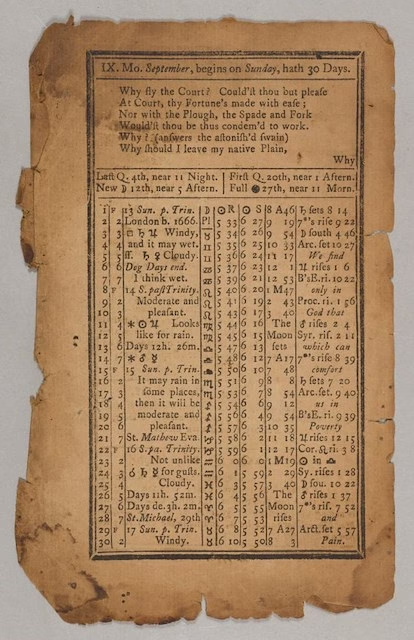
Popular observations and lore developed around weather. But perhaps most importantly, 18th Century peoples spending a significant amount of time outdoors were likely more apt to notice changes in their environment. Changes to wind direction, air pressure, and clouds all provide indications that still help information modern day weather predictions. As you step out onto your next outdoor adventure, consider try to make observations and inferences about the weather. Consider the planning and adaptability required of 18th Century people who lacked precise weather updates and data.
hAPPY AMERICA 250!
Thanks for reading our article. These skills are by no means ranked in a particular order. Rather we offer you this list to offer perspective on the life of 18th Century people in hopes we might find some appreciation and understanding of our collective past. However you choose to spend your Independence Day and America 250 celebration, we hope you find a time to get outside and gather with friends and family!
As the America 250 celebration continues over the next several years consider attending an event to learn about history! See here.