This article series focuses on the stories of West Point Cadet Fly Fishing Club alumni members, leaders, and supporters. Accordingly, we explore the confluence of service, fly fishing, and mentorship. The views expressed in these articles are that of the author and/or the original interviewee and do not reflect the official position of the United States Military Academy, the USCC Cadet Fly Fishing Club, United States Army or the Department of War. Thank you for reading!
Who is Thomas Matty?
I’m a faithful husband, loyal friend, Field Artillery officer, and outdoorsman with a sarcastic sense of humor. I take every opportunity to get outside and reinforce the importance of physical, emotional, and spiritual healing, both in and out of fishy waters. I see the positive in all things, learn from the challenges, and embrace friction. No such thing as a bad day on the water!
Tom’s intro to fly fishing
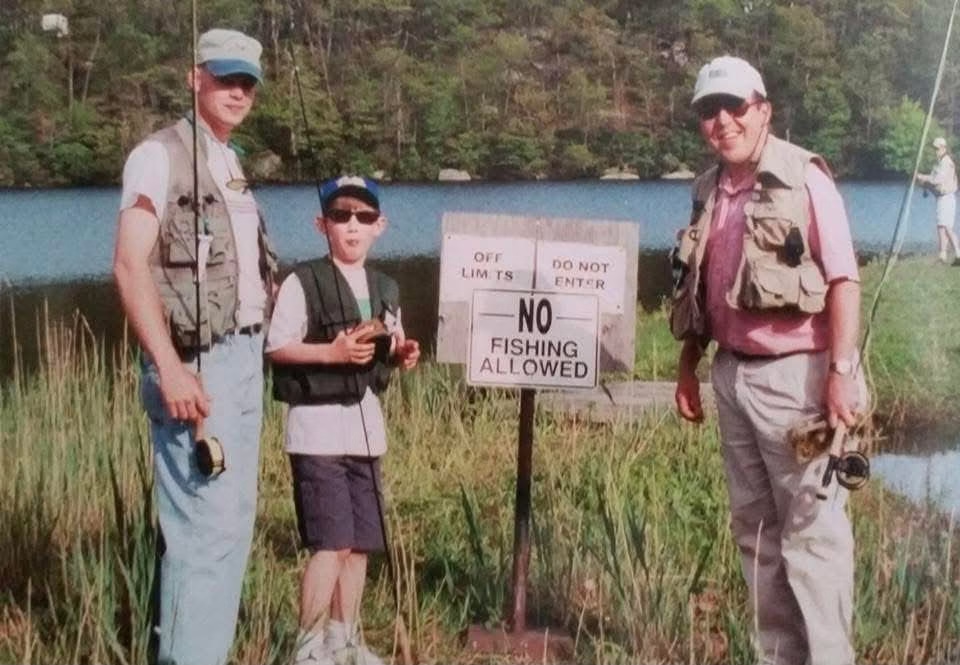
When I was five years old, I received my first fly rod, and the rest was history. At the time, I lived at West Point, New York, where my father, Doug Matty, was serving as a Captain and teaching in the mathematics department. Because of his own passion for fly fishing, he became the Officer in Charge of the United States Military Academy Fly Fishing Club.
While he served in that role, I attended nearly every meeting, event, outing, and fishing trip. I was surrounded by cadets, officers, and experienced outdoorsmen who volunteered their time to mentor and develop others. Through that exposure, I became a dangerously addicted six-year-old who wanted nothing more than to be on the river, throwing what I imagined was the “A Goofy Movie” style perfect cast.
During that time, I also had the privilege of learning from my role model then Cadet Michael R. Adams. He not only encouraged my addiction to fly fishing but also helped shape the man I am today.
Service and fly fishing
As I mentioned, my early exposure to West Point gave me a dream to pursue, and from that point forward, I was committed.
Sadly in the spring of 2004, I found out that my “older brother,” hero, role model, 1LT Michael R. Adams was killed during his deployment to Iraq. This was one of those days where the world stood still, as a 10 year old kid, I couldn’t quite grasp the reality that my fishing buddy, Cadet, and hero was gone. I took every opportunity to fish, learn, and stand up for others, like Mike.
Fast-forward 14 years, and I was a plebe at the United States Military Academy, serving as the Cadet in Charge of the Fly Fishing Club while balancing sports, academics, physical development, and military training. Having my greatest passion also serve as my strongest outlet from the chaos and demands of West Point made the experience much more manageable and enjoyable. USMA was challenging, but I had a great time and would do it again.
My personal formula was simple: success in the classroom, athletics, and military training created more opportunities to fish. Eventually, all of those parts of my life merged into one—and, as they say, a river runs through it.
Finding Balance
Since commissioning, the opportunities to fish have had their ups and downs. Fortunately, the Army has done a solid job of placing its installations within a 250-mile pass radius of some of the best fishing waters in the United States. (Tennessee, Colorado, New York, Georgia, North Carolina, Texas, etc.) It just requires time, gas money, and a willingness to travel.
Before you ask who would travel that far over a three- or four-day weekend, remember: it’s fly fishing, I’m an addict, and tight lines cure the soul.
Naturally, fishing becomes less frequent during major training cycles and deployments. During those periods, the fly-tying vise gets packed so I can use it whenever some downtime becomes available.
In every unit where I have served, I’ve tried to be known as the dependable guy, the go-to guy, the workhorse—and the fisherman. Most Monday morning synchronization meetings seem to cover maintenance, administrative updates, Tom Matty’s fishing report, and upcoming training.
The Army has a way of allowing people to balance their passions, but it ultimately comes down to the shared investment we make in one another. For some of my teammates, that means vicariously enjoying fishing stories filled with scenery, humor, success, failure, and the unpredictability of nature.
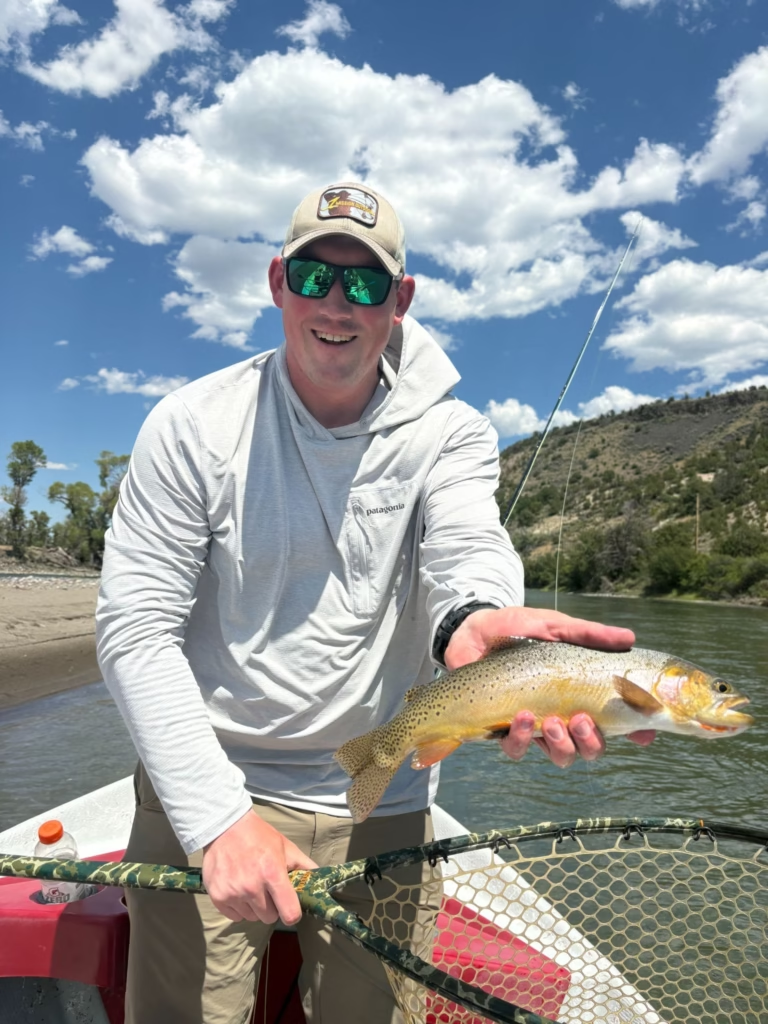
Relationships and the Outdoors
I’m the type of person who will drop whatever I’m doing to help someone, whether they need assistance with work, life, manual labor, or fishing. I try to focus on positive energy, the little things, and finding peace in a world that often feels chaotic.
Sometimes, though, we also have to become agents of chaos—embrace it, channel it, and turn it into something productive.
I feel a strong sense of responsibility toward the people around me, especially when it comes to making sure they know I am always in their corner. One of the easiest ways to support someone who is going through a difficult time—or simply trying to maintain healthier habits—is to get them outside.
Whether it’s a river, stream, mountain, desert, or forest, there is something powerful about nature. It can remove the frustrations of everyday life and allow a person to experience the spiritual and emotional benefits of God’s creation.
Another important relationship is your partner or spouse, and I hit the jackpot with mine also wanting to fly fish as much as I do.
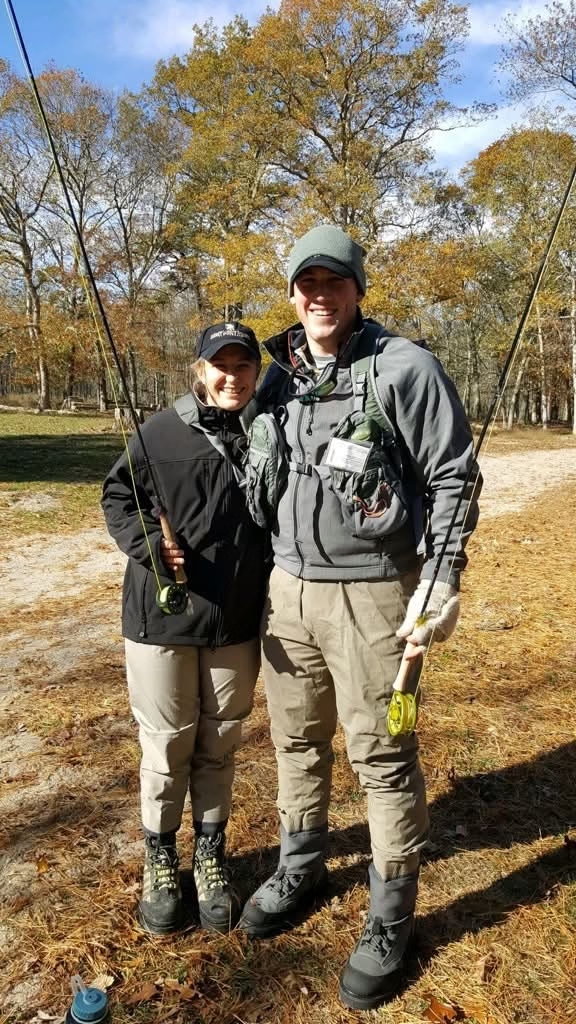
Chelsea was the 2018 Fly Fishing Club Cadet-In-Charge (CIC). While the morning drives or trips are spent snoozing as a passenger princess, Chelsea, brings the same level of passion and intensity to the water. She loves a challenge, especially in the fact she throws yellow sallies all year, her favorite fly. But she is willing to negotiate on her dropper. She loves the outdoors and consistently seeks opportunities to work with other clubs and organizations. Having a spouse that has a similar hobby is huge.
Life is good.
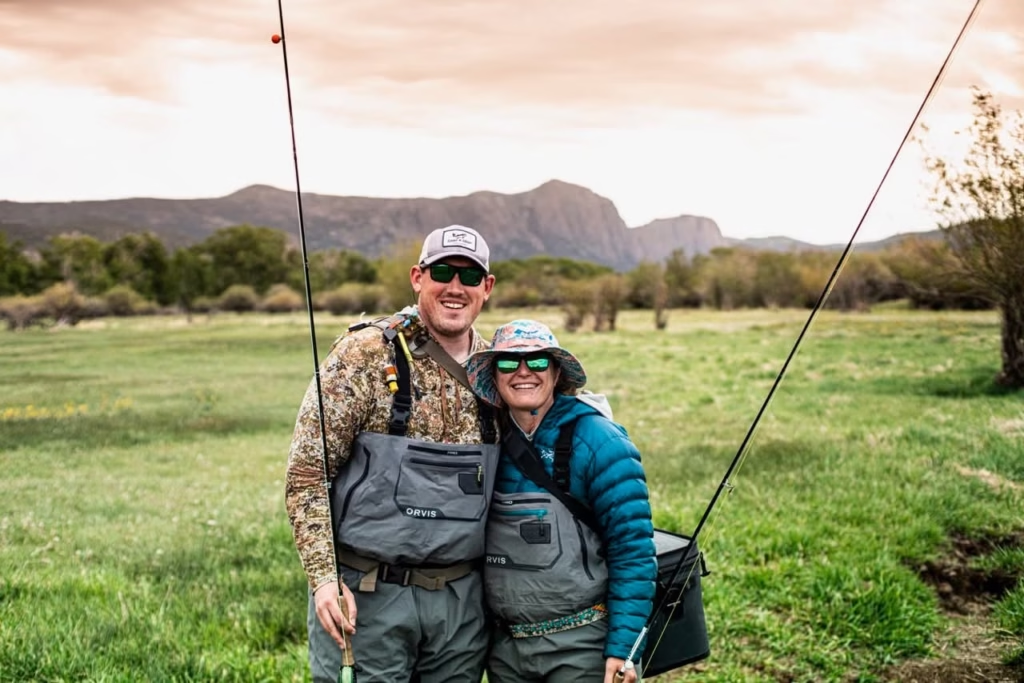
Some Fly fishing Highlights
My favorite water will always be new water. There is nothing more exciting than exploring a new river or stream and discovering its views, wildlife, co-users, fly patterns to insect matching, and various fish.
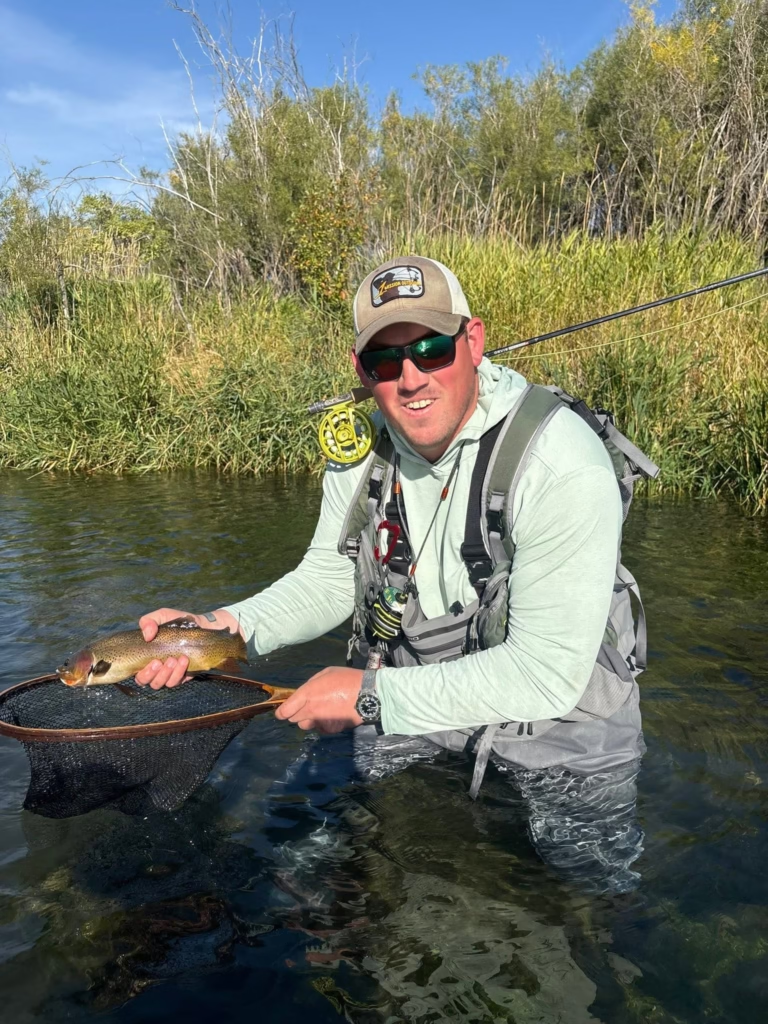
However, if I had to choose a few favorites from more recent years, I would say the waters of Yellowstone National Park, which I fish with LTC (R) Ryan Travis, who also was the OIC when I was the CIC at USMA, another benefit of the sport is the relationships you build along the way. Another spot I love is the Arkansas River in Colorado. Both areas offer unique scenery, incredible numbers of fish, consistent insect activity, and year-round opportunities—as long as you are willing to bundle up.
In the near future, I’ll be heading to Key West to chase tarpon and bonefish. In September, I plan to be in Wyoming pursuing large brown trout on the Green River. Then, in October, I’ll fish the North Platte also in Wyoming, targeting browns and rainbows along the Miracle Mile and Grey Reef.
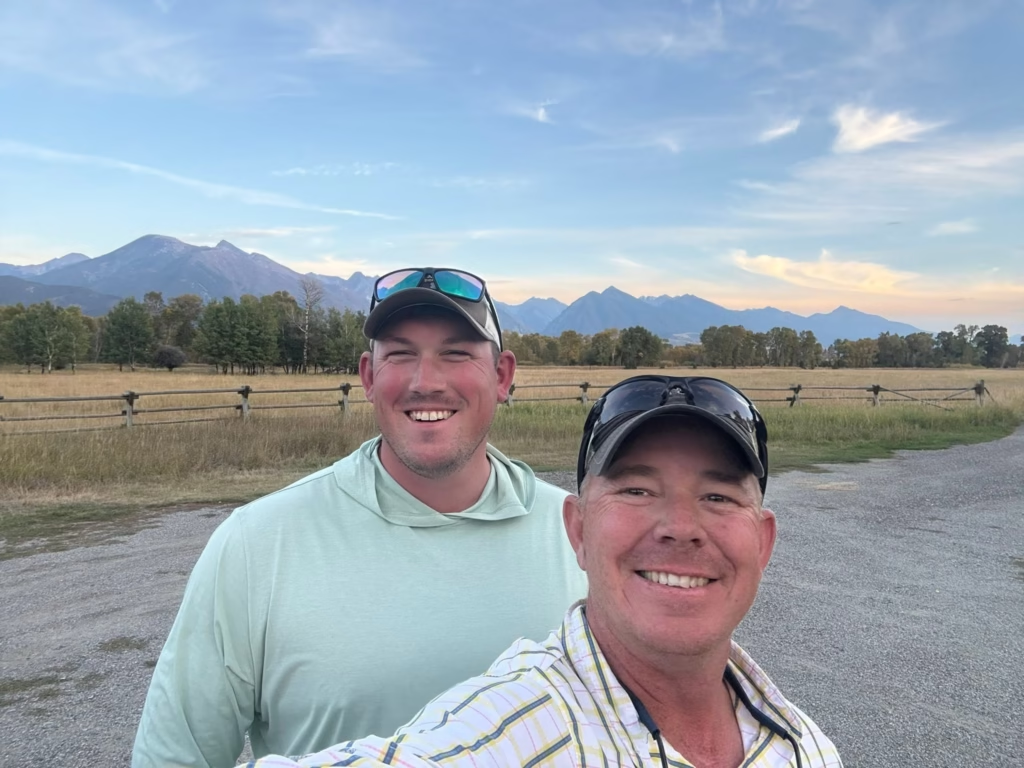
On the Horizon
I’m approximately a year away from promotion to Major, completing a rewarding broadening assignment with United States Space Command, and moving to Kansas to attend the Command and General Staff College. After that, I’ll move to my next duty station, where I will spend the majority of my time as a Major.
I’m looking forward to the opportunity to continue growing, developing, and mentoring the next generation of officers and Soldiers. Building teams is one of the most enjoyable and rewarding parts of military service. Good teams are contagious, and their influence can extend far beyond a single assignment.
Fishing will always claim a significant portion of my energy for unwinding and resetting. During this next stage of my career, I’ll simply have to be more deliberate about planning my trips and taking advantage of every opportunity that comes along. But I also use these windows to read, research, and educate others on Fly Fishing.
Advice to New Anglers
There are now so many groups and organizations dedicated to supporting new anglers, servicemembers, veterans, and people who are simply interested in getting outside. There is no reason someone cannot reach out, show up, try something new, and decide whether it is right for them.
The most important thing about any hobby is that it provides an outlet—a chance to break away from the normal routine and experience something that offers genuine enjoyment, personal growth, or a sense of accomplishment. Not every part of a hobby is necessarily enjoyable, but working toward a goal or accomplishing something difficult can be equally rewarding.
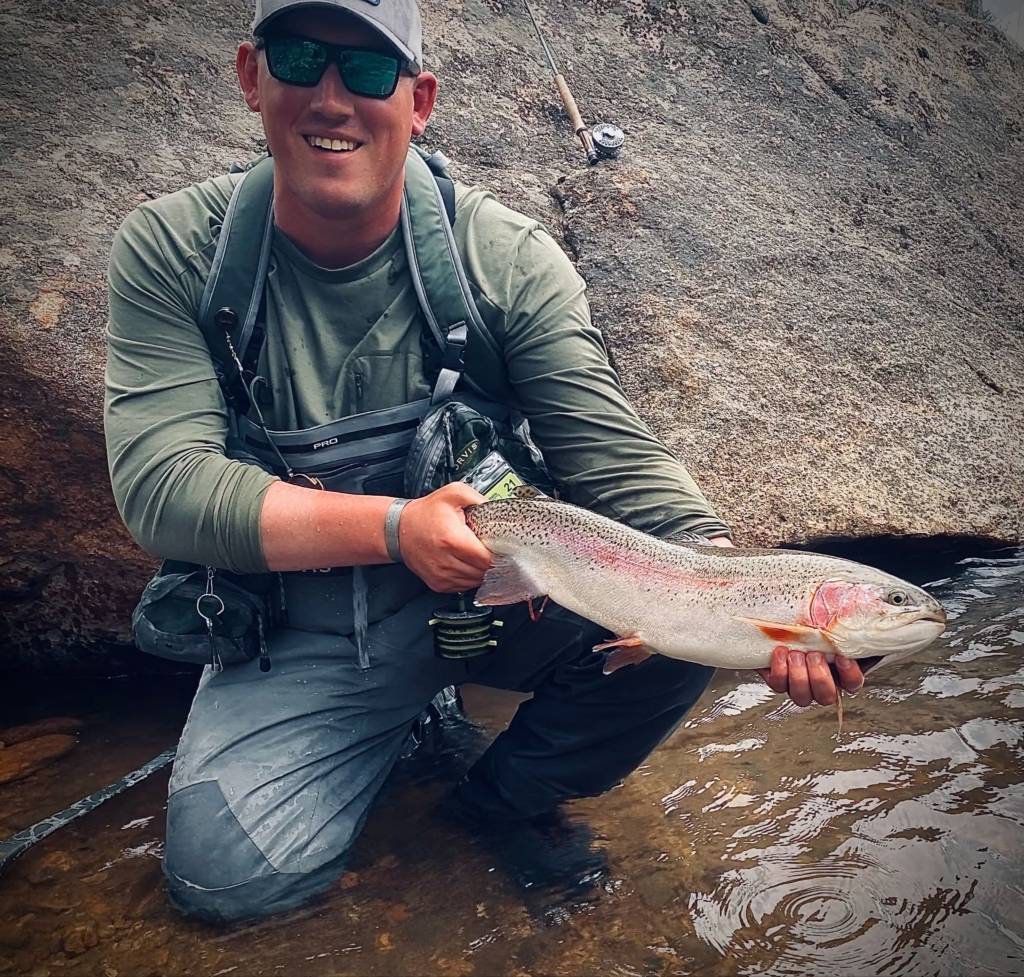
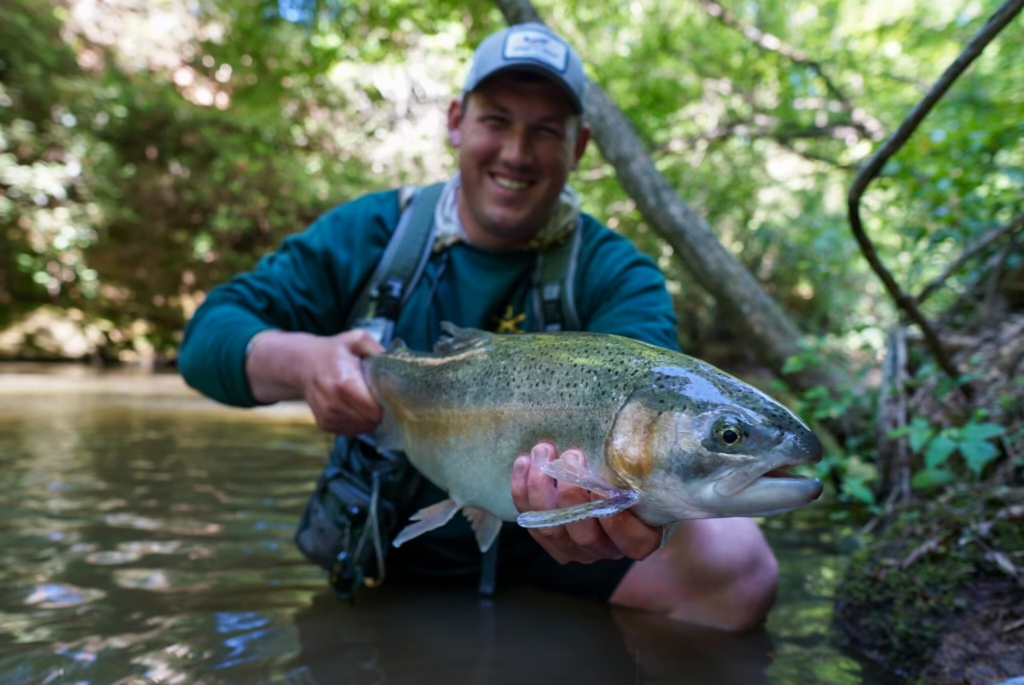
Hobbies also create community and a sense of inclusion. Fly fishing can be done alone in a canyon at sunset, with a large rainbow trout slowly rising to sip a dry fly from the surface. That moment becomes locked in time between you and the fish, and you may remember it for the rest of your life.
On the other hand, fly fishing can mean taking a group of new anglers onto a river surrounded by beautiful views, cool water, great lunches, plenty of laughter, and—hopefully—a few tight lines to encourage the early stages of their own addiction.
Fly fishing has taught me the importance of patience, observation, reading, and listening. It has also taught me that success is not always measured by the fish we catch, but by the memories we make when we step away from the chaos and learn to appreciate the moments, the peace, and the little things.
Life is good.
Thanks for Reading
If you enjoyed this article please consider joining our e-mail list or following on social media. Find more articles like this here.
A big thank you to Thomas Matty for taking the time to answer these questions and for his years of support to other anglers.
For a brief overview of the West Point Cadet Fly Fishing Club check out this article from the West Point Association of Graduates.
Remembering 1LT Michael R. Adams – Steel Hearts Foundation