In Part 2 Ansel continues his backcountry Kodiak Alaska Mountain Goat Hunt. Read Part 1 here and Alaska Mountain Goat Hunt highlights here. Thanks for reading!
Day 4: After the Shot
The report of the rifle was deafening, as I had forgotten to place the earmuff on my right ear. In the ensuing scramble, I lost sight of my billy, and all the other goats scattered across east face. Remaining in place we watched for, but did not see an injured billy. Standing to gain vantage, we spotted a nanny looking downslope beyond our line of sight. She remained looking that direction for quite some time. Eventually, the goats re-grouped and filed to the west, leaving only Christophe’s billy in sight.
Expecting to be over-gunned with a 200-grain Accubond bullet pushing 2900 feet per second at relatively close range, I assumed I’d find a huge swath of blood. After searching for forty-five minutes, we never found a speck of blood on the ridge top. I felt defeated that I had missed my shot. The afternoon was getting long. Christophe pointed out that we had a goat on the ground that needed to be processed. I just could not understand how I missed such an “easy” shot. The image of the nanny looking downslope stuck in my mind.
TRUST YOUR GUT
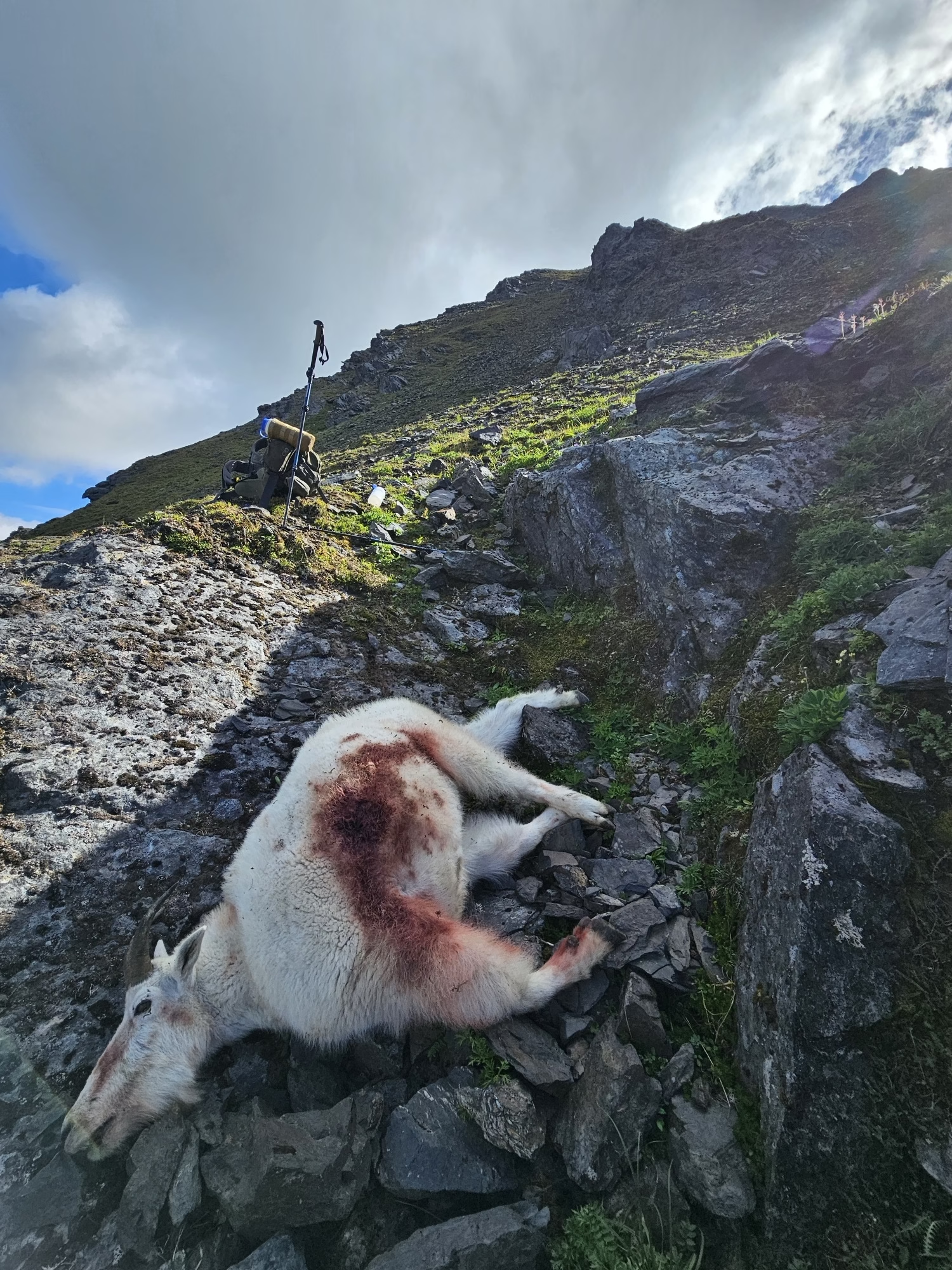
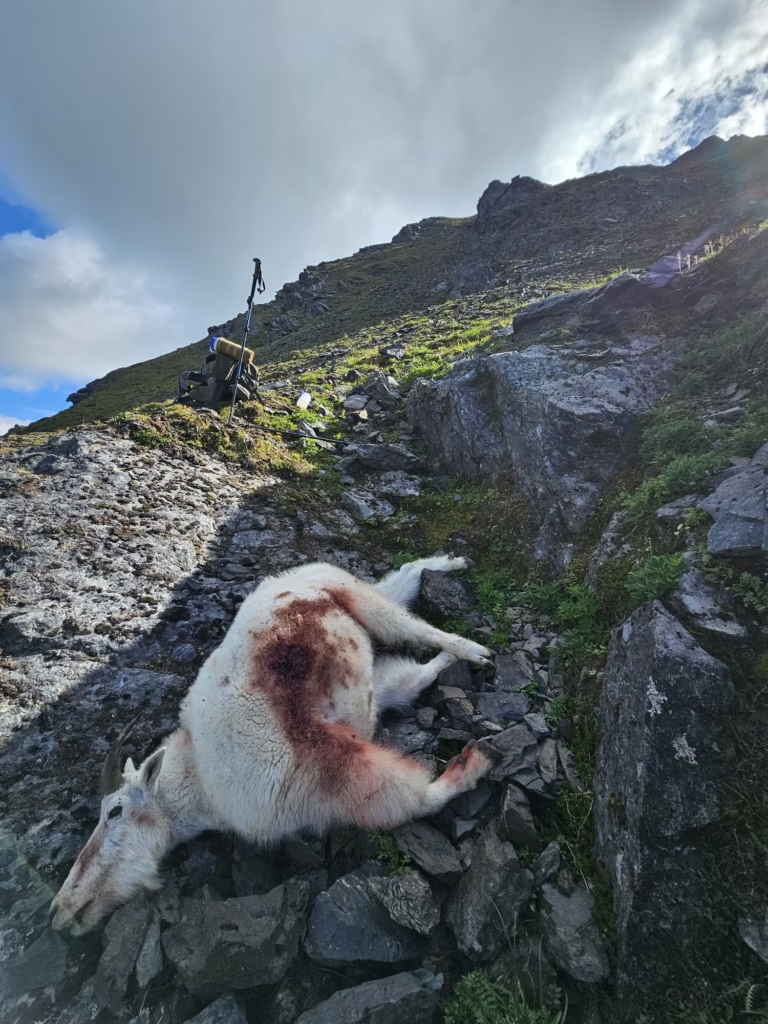
Following my gut, I told Christophe that I would take a slight detour and try and see if I could find any sign of my billy. I worked my way toward where that nanny was, and found absolutely nothing. When I got to the same elevation as Christophe’s billy, I begrudgingly began heading west back toward him. All of a sudden a speck of white in a hidden gully caught my eye. You could not see it from the ridgetop. Thinking it was just a snow patch, I took a quick glance with my binoculars. I saw a small tinge of red. Yes, blood, I thought. I hurriedly went to see what the blood looked like. When I approached, I realized it was the rump of my billy.
Hallelujah. I was over the moon!
My billy was in a precarious location, facing downhill in a narrow gully, and sliding downward at the first touch. The gully severely steepened about twenty feet down from where he fell. I tied his front right leg up to an outcrop using paracord and a rock to wedge the cord into a fissure. An absolute stench of partially digested greens and bile arose as I began processing the billy. It was apparent that the animal was quartered to when I shot. The exit wound was behind the shoulder, and the bullet clipping the stomach.
FIELD PROCESSING MOUNTAIN GOAT
While I was not able to save the liver, the heart was fortunately untouched. Adding to the aromas was the pungent smell of an old goat. I had low expectations for the meat’s taste.
I processed the goat, carefully placing the quarters on little flat outcrops I could find in the ravine, when I heard Eric calling down to me. He had heard the original gunshots from camp and had hiked up the mountain. He had accidentally taken a more difficult route than our ridgeline trail, traversing above the very steep cliff face that I hoped my billy would not tumble down.
Luckily, Eric is an experienced climber with multiple Denali summits, his skill safely leading him to my position. Eric helped me finish cutting up the goat. When I went to place the hide and skull in a game bag, I was met with immense weight. Despite being blood-soaked, the summer hide was not supposed to be this heavy! As I inspected the hide closer, I realized that the hide was trapping pounds of the volcanic sand that the billy was rolling in. Good grief.
PACKING OUT
With only one way out, we made a plan to hike back up approximately five hundred vertical feet to reach the ridgeline. I handed Eric all my extra gear and took my meat and hide all in one pack and attempted to ascend the slope. But I went nowhere, gaining only 150 feet before being absolutely wiped.
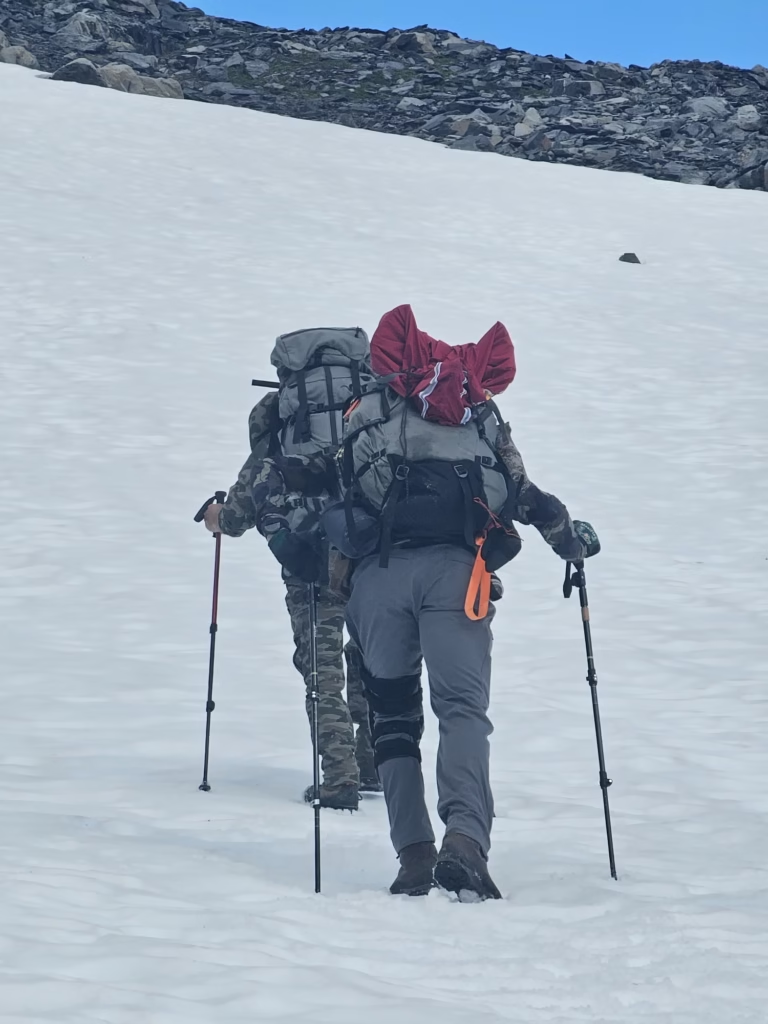
I could feel the lack of calories and water taking hold. I had not consumed any form of nutrition in hours. I dropped the hide, skull and half the meat, and Eric and I started making the ascent up the slope.
Christophe had InReach’ed earlier that he was nearly finished butchering. He shortly appeared side-hilling towards us with his entire goat on his back. He split his load and we all ascended towards the ridgeline.
It took two trips between the three of us to get all the meat, two skulls, one hide, and our gear to the top of the slope. By then, it was around nine in the evening and the light was fading fast.
pACK oUT dECISIONS
Looking back to the previous day, we thought we could descend on the grass slopes of the south face of the ridge and take a “shortcut” to camp. Due to the steepness and our heavy loads, we had to leapfrog with packs and rope. We made multiple trips to a mid-slope bench. The evening dew set in and the grass became increasingly slick.
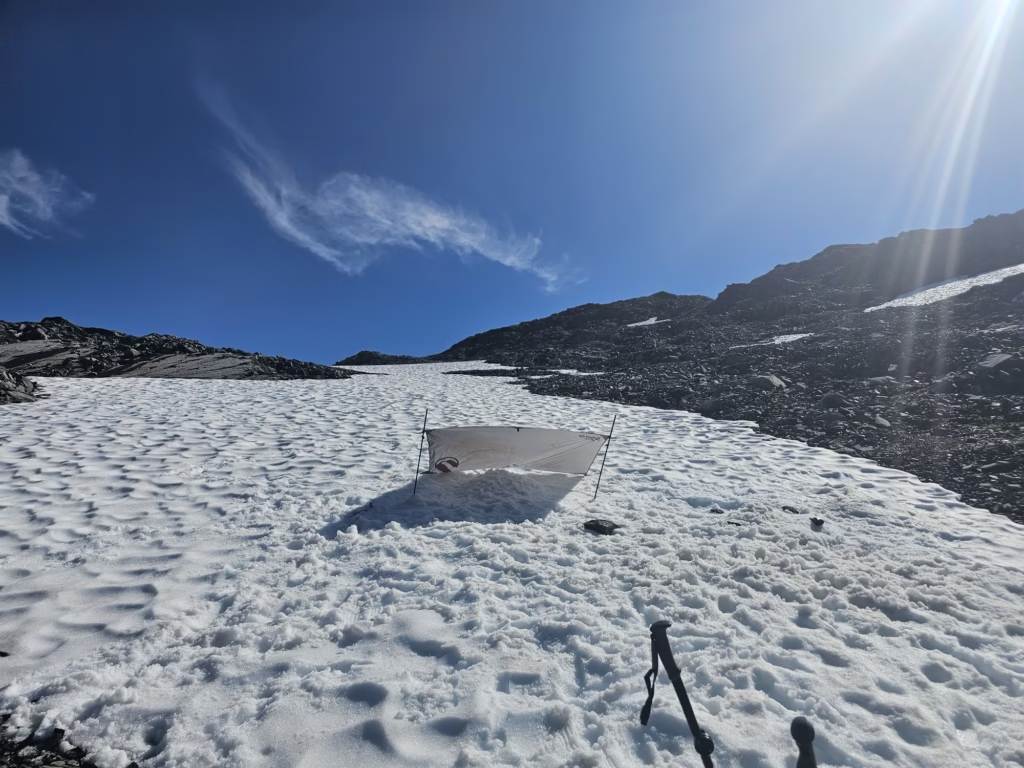
After some close calls in the dark with dim headlamps, only two sets of microspikes for three guys, and a pack tumbling down the cliff, we decided it was best to stash the meat and hide on the mountain. We then ascended the ridge, and followed the rocky ridgeline back down to camp. We zigzagged between patches of snow to try and quench our thirst. We arrived at camp at approximately two in the morning, weary, thirsty, and utterly exhausted, but ecstatic that we had doubled on billies.
Day 5: Meat Run and Mountain Repairs
Eric and I headed back up the ridge to where we had stashed the meat and hide on the steep grass slope the night before. Christophe went to find his pack which had “bivied” mid-slope overnight. Chance would have that we stumbled upon a lone nanny about a thousand feet above camp, which would have been an easy pack out.
Eric and I were just cresting the uppermost part of the ridge when we heard the familiar roar of a de Havilland Beaver in the valley. We saw our pilot touch down in the lake for the meat run. But it was scheduled for the afternoon, not mid-morning.
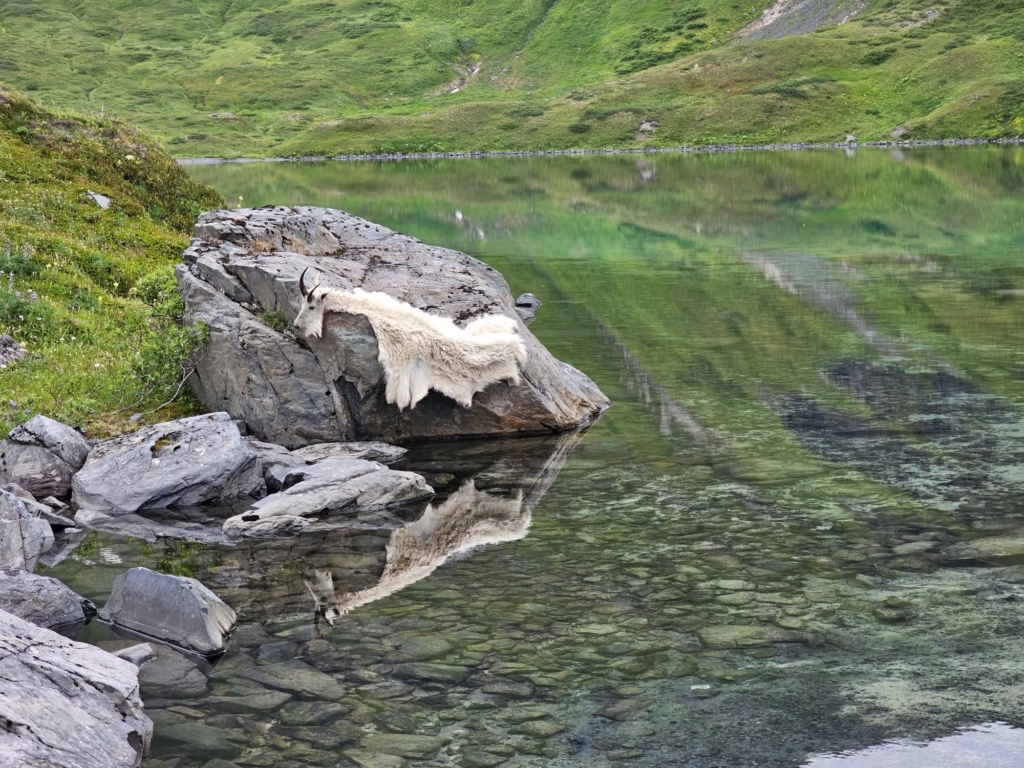
It was couple of hours to get back to camp, so there was nothing Eric or I could do. We assumed that Christophe was in the lower part of the ridge looking for his pack. Miraculously, we saw the plane idle back to the southeast corner of the lake, nearest our meat stash, and park there. Christophe must have known it was coming.
LUNCH AND FIELD REPAIRS
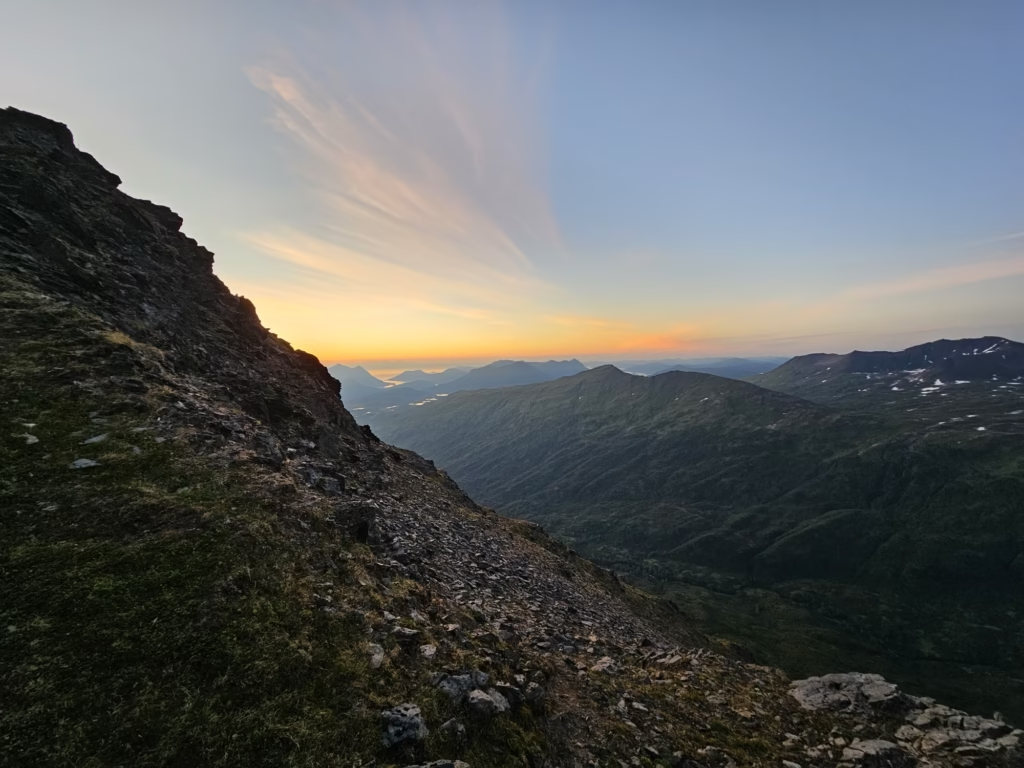
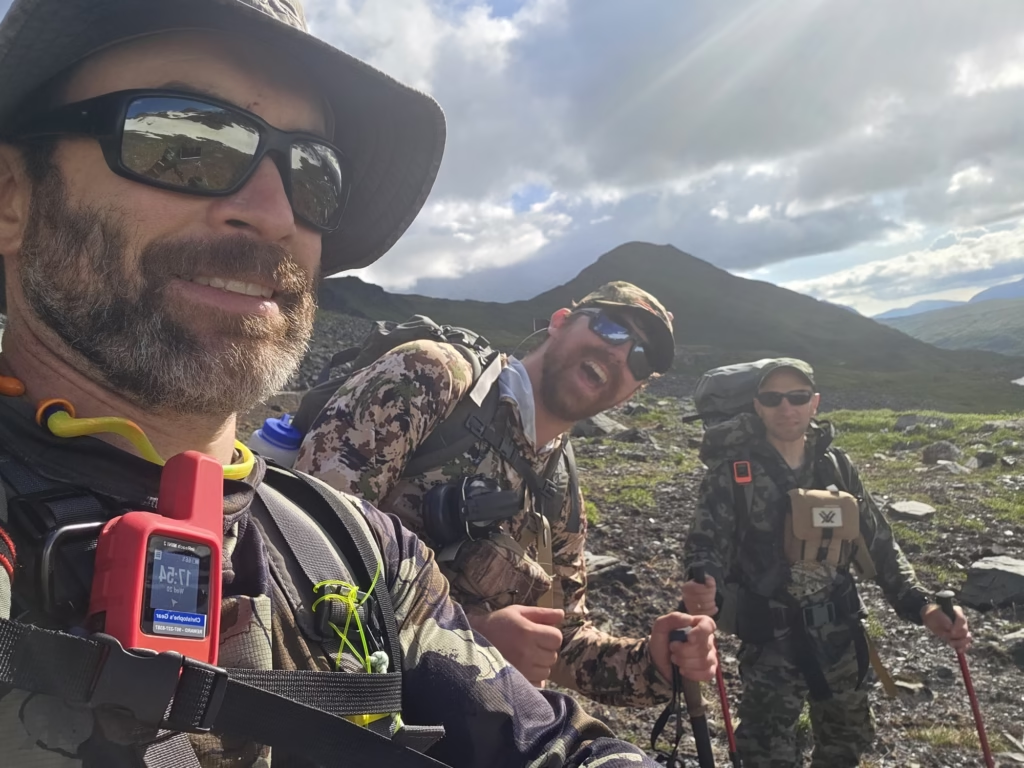
Lacking microspikes for his boots, Eric stayed on a rock outcrop. I went and got the rest of the meat and hide that was stashed on the grassy slope. After hiking up and traversing the south slope, Eric and I sat down and had our lunch. We enjoyed cheese, mustard, and sausage tortilla wraps that Christophe made. The view was breathtaking, being able to see the ocean to the northwest and nothing but mountains and lush valleys everywhere else. Eric and I posed for a brief photo-op and headed back down the mountain. We slowly-hunted the way back, looking for any sign of blacktail, but to no avail. Back in camp, we learned that Christophe had transferred all the meat, besides the hearts (saved for dinner!) and the meat in our packs, to the floatplane pilot for storage back in Kodiak.
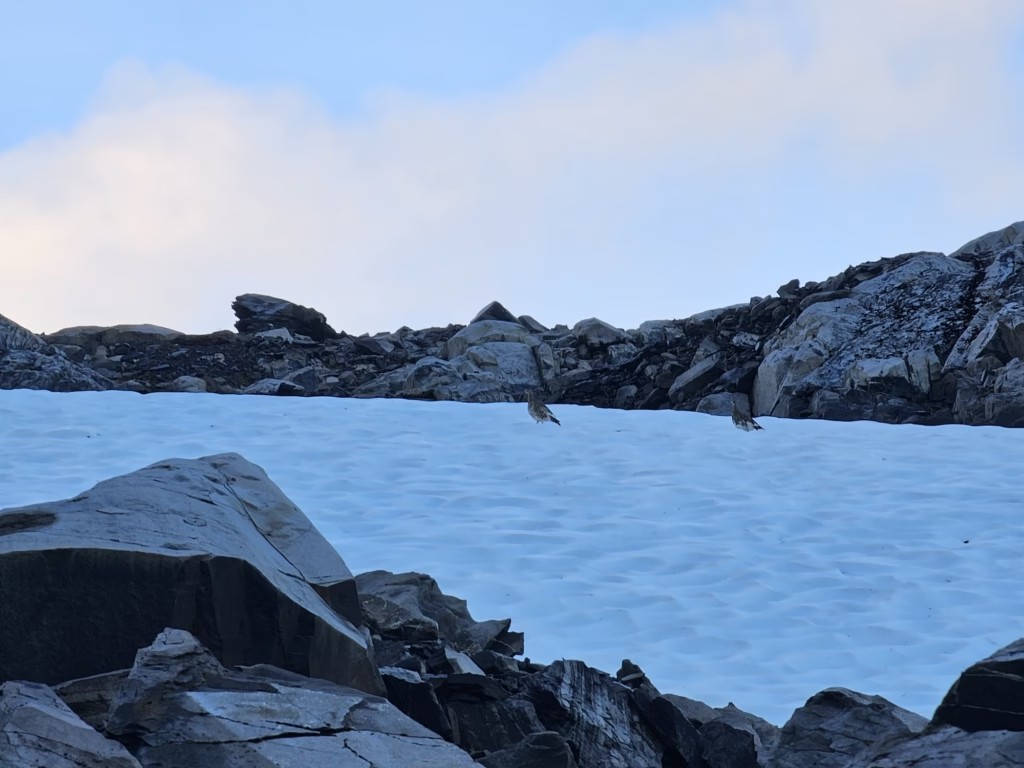
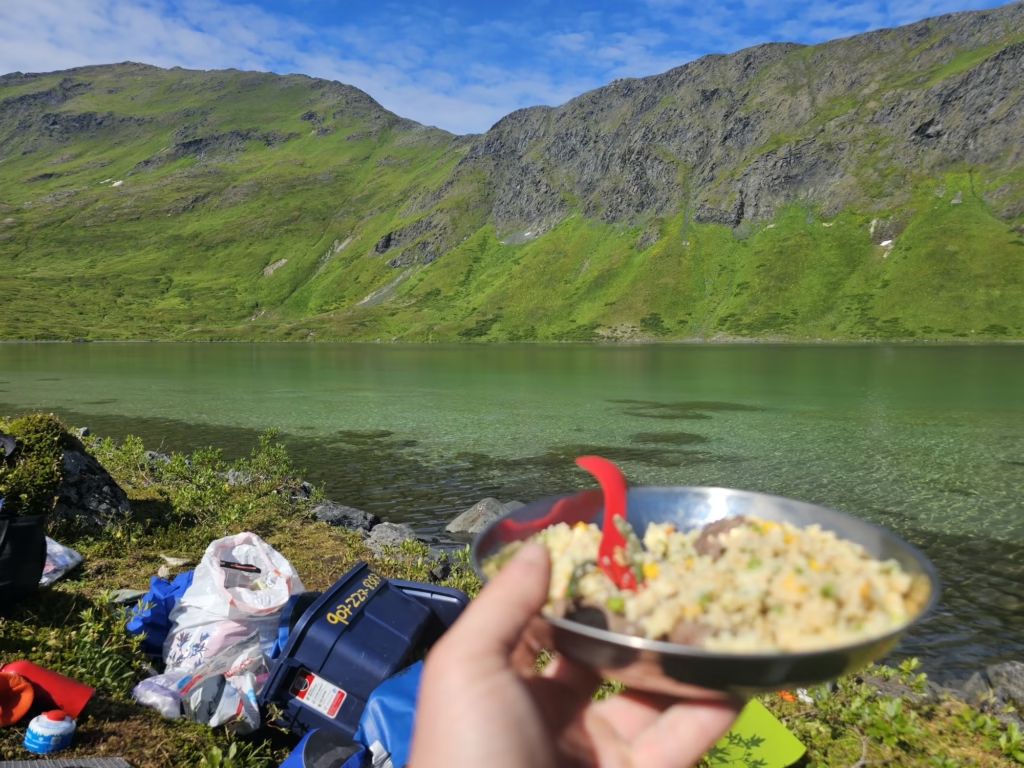
What a feast we had that lunch! We ate Ptarmigan harvested by Eric the previous day, with goat and venison heart paired with quinoa, peas, carrots. We added a cream sauce Christophe whipped up deglazing the meat pan with brandy, and mixing in powdered cream and butter. After the previous day’s events, we all agreed to take the afternoon off, save for a bit of ptarmigan hunting around camp, to rest and organize gear.
Christophe had located his pack, which had tumbled several hundred feet through a rock band. The fall ripped off several straps and buckles, and ejected some gear that was never found. Luckily, Christophe had a repair kit ready to go and sewed up enough of the straps to make the pack functional.
A WEATHER CALL
Later that evening, we received an InReach message from the air-taxi service. He stated that the weather was looking bad later in the week when we were scheduled to depart. It was possible that if we did not leave next day, it would be a week or more before we got another chance to go home. After much deliberation, we decided that we would head back to Kodiak the next afternoon. We had had tremendous luck up until that point, and we did not want to push it. We decided that Christophe and I would head back to the valley where he had shot his big buck early the next morning to try and get me a deer. Eric would start to break down camp.
Day 6: Bittersweet Farewell
The next morning, Christophe and I tried to book it to the valley to glass for deer before our self-imposed cutoff time. But we could both tell that I was gassed and not able to keep pace.
We audibled and simply set up watch over the ridge system directly above camp and waited patiently for the summer sun to come up. It was bittersweet knowing we had to leave the place that had been so giving to us, but as they say, all good things must come to an end. After not seeing any sign of blacktail, we went back to camp and helped Eric pack everything up.
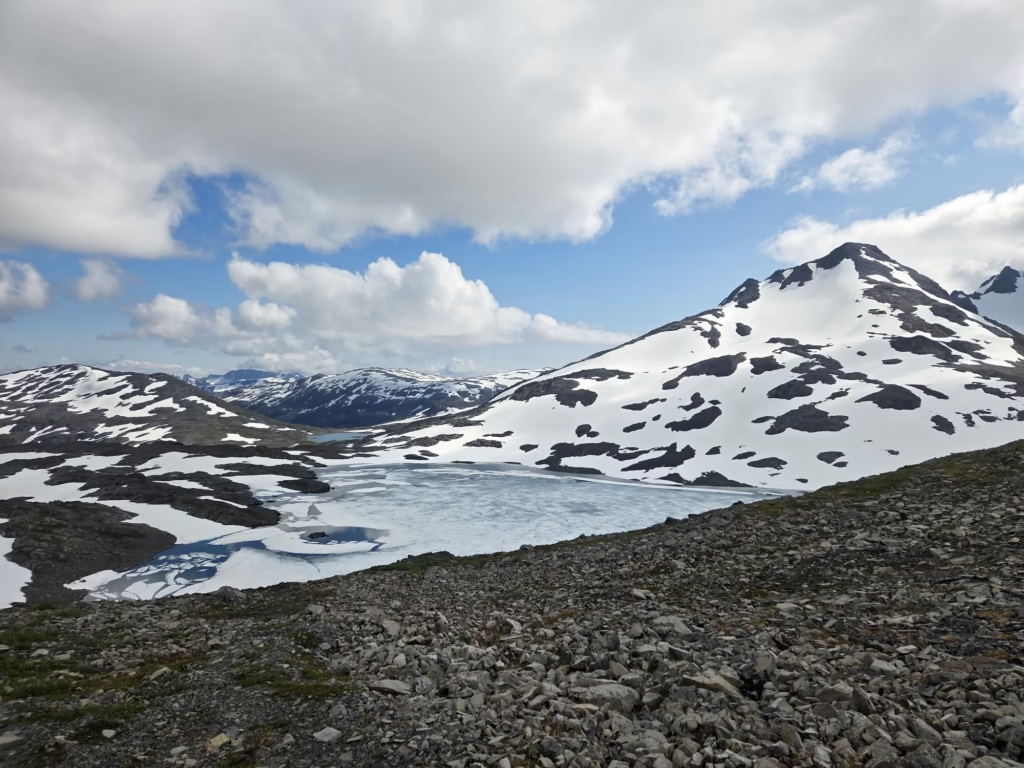
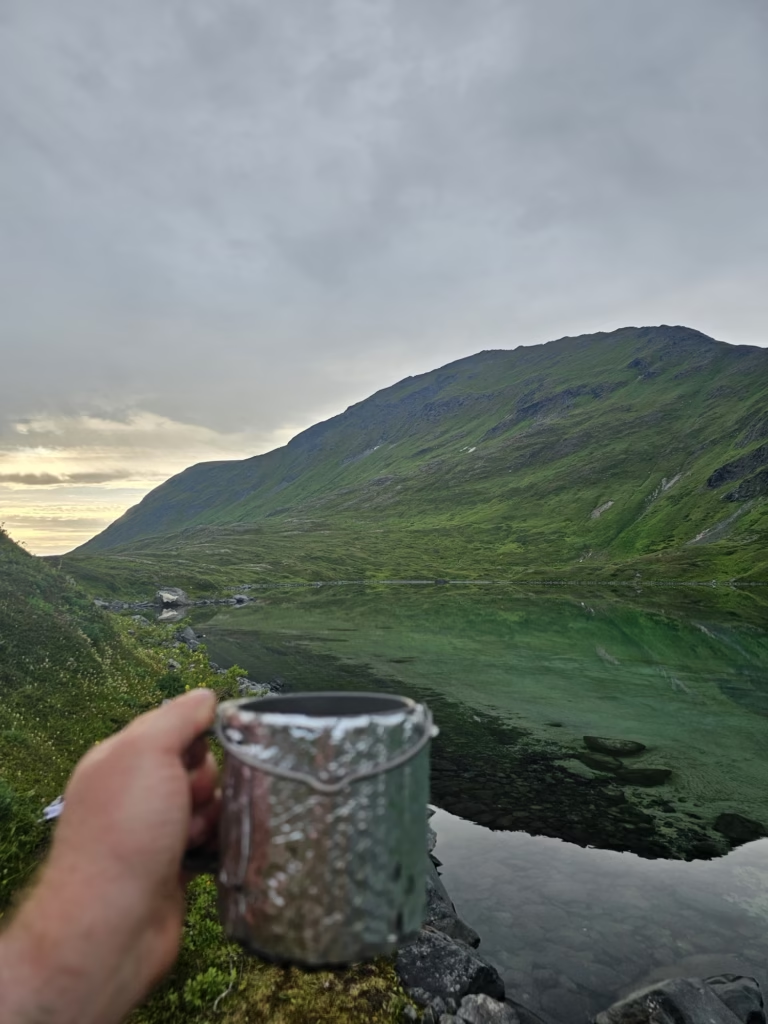
Our pilot, Rolan, needed a wind of five miles per hour out of the west or the north to comfortably take off from the lake with all of us and our gear aboard. When we reached camp, we realized the lake was glass calm. This made for awesome photos, but presented poor conditions for our pickup.
After messaging Rolan, we decided that our exit would require splitting the load and a shuttle run to a larger lake in the area. I am on the very large side for humans, and with Eric toward the opposite end of the spectrum, the first load was Eric and all of our gear and meat, save some survival basics. The second load was just Christophe and I, with our goat skulls and hide. Meeting Eric at the larger lake, we packed the plane and had ample runway for take-off.
a gOOD pILOT
Rolan is very knowledgeable about the history of the area, including the hydro power tunnels, and the past crab and shrimp fishery. He had some incredible stories about wildlife from his years as a pilot. It was an absolute pleasure being able to ride up in front of the plane with him. Once we got to Kodiak, we had just enough time to dash our meat, skulls, and hides to air cargo. Afterwards, our AirBNB host was kind enough to let us completely yard sale all of our gear in her driveway. After what felt like hours, we had all of our gear organized and ready for the flight back home to Anchorage. Our host had two lovely goldens who loved to cuddle with Eric. After a short dinner and much-needed hot showers, we had an early bedtime.
Day 7: Homeward Bound
Our host agreed to take us to the airport in the morning, and going early before our flight paid huge dividends. We arrived at the airport. Just as we got in line to check our bags, dozens of people showed up, seemingly each with multiple checked bags and a frozen fish box or two. Luckily, it was smooth sailing for us to Anchorage, and thanks to a friend with a pickup truck, we were able to fit all the gear and meat in one load from the airport to Christophe’s.
We processed the animals over two days and there was no spoilage, thanks to the snow “fridge” and the cleanliness of the meat. Even my “stinky” billy, which according to the internet, should have been borderline inedible, had wonderful flavor without “gaminess.”
We could not help but fry up a bunch of cuts right then and there. Having multiple chamber vac sealers and sharp knives was definitely necessary processing all of the meat, and we each still had very full freezers after sharing with friends and family. Our wives and fiancés were happy to have us home early and safe. We will always get to be those lucky guys who got to see Kodiak in its sunny and seventy-five degree glory. I cannot wait for the next trip.