

Drew Shuptar-Rayvis is a citizen and cultural ambassador of the Pocomoke Indian Nation. He is an educator, a researcher, an advocate for living history, and passionate about indigeneity and indigenous culture. Read on as Drew shares a little about his journey.
Who is Drew Shuptar-Rayvis? Early Influences and Background

My name is Drew Shuptar-Rayvis, a citizen and cultural ambassador of the Pocomoke Indian Nation. I am an Algonkian living historian of the 17th and 18th centuries. I graduated cum laude from Western Connecticut State University with a Bachelor’s degree in sociology and anthropology and hold a certificate degree in Archaeology from Norwalk Community College. As one might imagine, history has always been a driving force in my life. My passion stems beyond the history of Algonkian peoples and languages, to history and language in general. While my primary focus is on colonial North America in the 17th and 18th century, I have also studied the Neolithic, Bronze, and Iron Age in Europe and the Levant.
Early Background
In addition to my Algonkian heritage, I am also Pennsylvania Dutch, Welsh, Swiss, English, Flemish, Scots Irish, Boyko (a Celtic-Slavic people indigenous to the Carpathian Mountains of Ukraine), Ashkenaz and Sephardic/Ottoman Jewish descent. My first cousins and I were the first not to be born in the southern mid-Atlantic of the U.S. in over 300 years.
By chance, I was born and raised in the wooded and hilly country of lower northwestern Connecticut. In this environment, situated in the southern foothills of the Berkshire mountains, a place of deep hardwood forests and shallow, fast-moving rivers, my mind was always imagining what the land looked like in centuries past. This landscape always tied me to the outdoors and the history of the region I lived in. It was in my mid-teens that I knew living history was something I wanted to pursue. At 18, I made my first set of traditional clothing, and my mother helped me make my first moccasins. I lived in those moccasins so often that they reeked of forest floor. By 19, I attended my first living history event and haven’t looked back since!
Working with the Maryland State Archives
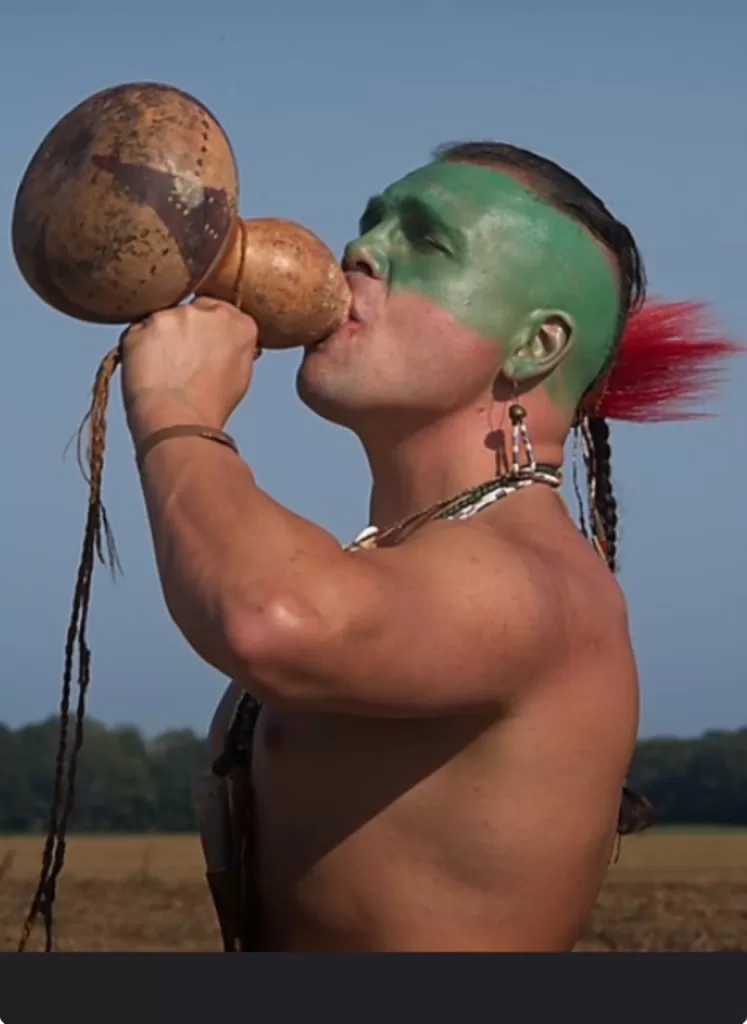
From May 2023 – August 2024, I was hired as a Contractual Research and Preservation Specialist by Maryland State Archives. This position was grant-funded to record tribal oral histories from Maryland’s Eastern Shore. I spent the next year interviewing members of four tribal communities. We recorded invaluable oral histories from citizens and elders ranging in age from 33 to 98. These oral histories were then uploaded to the Maryland State Archives’ “Mayis” website. “Mayis” is one of the largest databases of indigenous records in the southern mid-Atlantic region. While it primarily focuses on the state of Maryland and its tribal organizations, Mayis does contain records that go beyond the state’s current borders. Many Maryland tribal communities helped in its creation, from the inception of the database around 2018/19 to its fruition in 2022. This project inextricably changed my life.
Prior to the Mayis Project, I had worked on a gentry farm for six years. Working for the Archives fueled my passions and benefited Maryland tribal communities for generations to come. It also allowed me to spend time reconnecting with my tribal community. I was able to put my undergraduate training to work and I gained insight into the best oral history techniques.
Living History, Education and Cultural Heritage
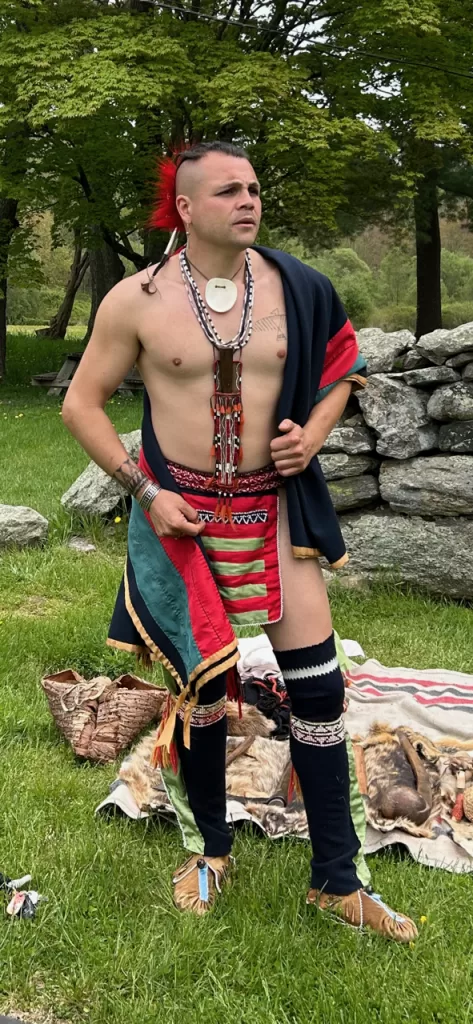
For me, living history isn’t just expressing a passion for history. It is an extension of the love one has for their family and place of origin. Most of the public know very little about the Native Americans of the East Coast, let alone the many specific ethnic groups and individual tribes. Living history is a way to bring history that may seem sterile, boring, or simply black and white, into breathing and living color. When done correctly, it can create an unrivaled immersive experience for the smallest child or the oldest adult.
My father always told me, “if you want change in the world, you have to make it happen.” That is how I view historical interpretation. I can’t be angry if people don’t know these things if no one has tried to teach them or make the information available. I would go as far as saying that most of my tribe feels it’s up to us to educate the public. If we don’t provide accurate history, we can’t complain about widespread ignorance and misconceptions.
By interpreting my culture, I am able to share my love for it, my family, and my ancestors, and bring the most interesting and tumultuous times in our history to life for the public. Interpreting also allows the audience to meet modern indigenous people. They can ask questions that are pertinent to today. It helps eliminate common conceptions of Native Americans as extinct or stuck in the past. My tribe was actually listed online as extinct!
How Nature and the Outdoors Shape Passions
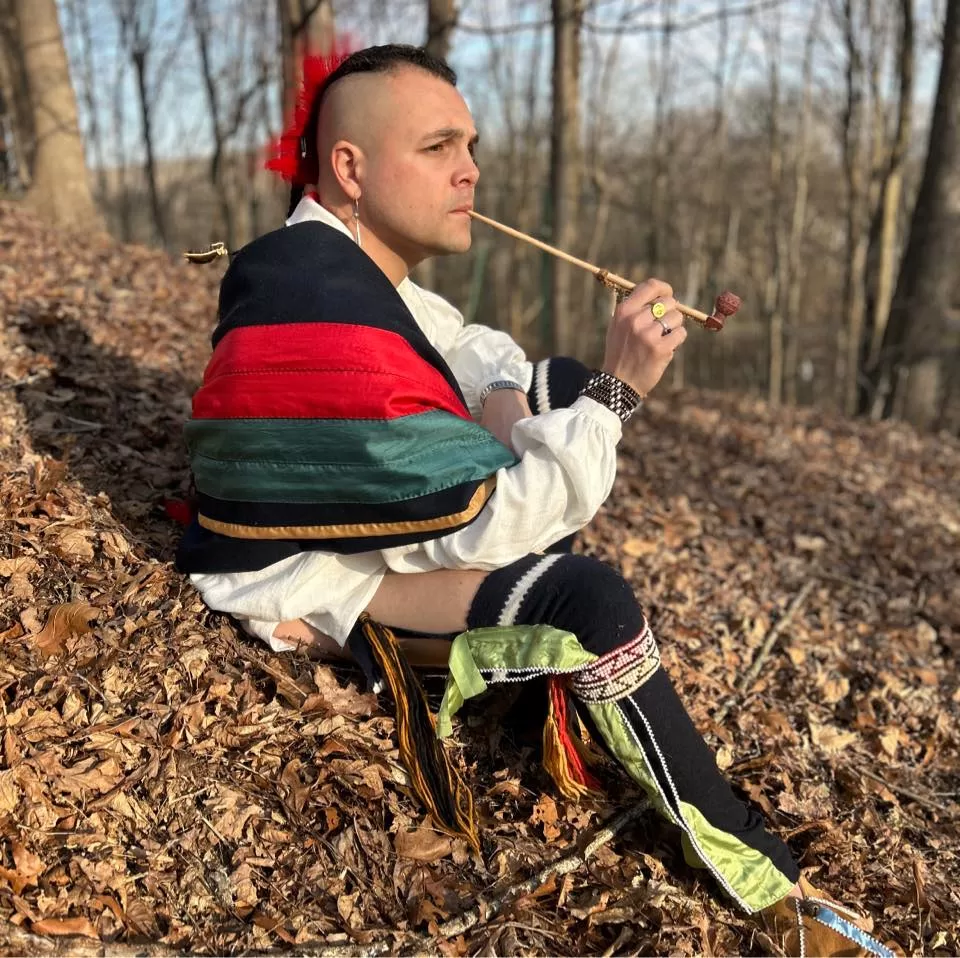
I have always been an outdoors person, a seemingly inescapable trait. Growing up in northwestern Connecticut, I was surrounded by the incredible vistas of mountains, rivers, hills, lakes, and meadows. It was the endless beauty to be explored that fueled my love for nature. The forest was my first playground; I spent countless hours wandering its timbered halls, tracking deer and turkey, drinking from wild springs, and communing with a landscape in a constant state of seasonal change.
As an adult, I dabbled in hunting and fishing, learning enough to sustain myself if necessary. But I would not consider myself an avid hunter or fisherman. I learned these things out of respect for nature and the ways it has sustained us over millennia. The heavily forested mountain landscape of western Connecticut easily led my mind wandering back to pre-contact and early colonial times when the whole Eastern seaboard would have been relatively untouched by human influence. The landscape in that area is now very similar to the wild state of those early times.
Why Traditional Wisdom and Skills Matter

All of the world’s indigenous cultures, on every continent of the earth and among all races of men, are steeped in the traditional wisdom of that region. Traditional wisdom is the heritage of every man, woman, and child. At their core, all of these collections of wisdom are different paths to the same root knowledge. The heart of global indigeneity is about living in balance with all forms of creation, from our vibrant varied landscapes to the unique plants and animals that share our space and the delicate balance woven between all the life of the earth, sky, and waters; it teaches, it grounds us, and it centers us in immense humility, natural beings inside of a natural world.
Current Research and Lifelong Learning
Learning is a never-ending task, however out of all of life’s labors, this one is my labor of love. I always have multiple angles of research occurring. However, I am currently spending time researching and learning more about Haudenosaunee culture and history during the 17th and 18th centuries. With much of my focus on the Algonkian-speaking peoples and their related cultures, I realized I needed to broaden myself. The interactions between these two peoples were pivotal in that time period. I also dabble in researching the ancient world of late Bronze Age and Iron Age Europe and the Levant and listen to lectures on the subject often.
Spreading Awareness on Global Indigeneity

I think the largest issue I would like to spread awareness about is that all of us in the world are indigenous to somewhere on this planet – no matter our color, race, or ethnic background. Due to this shared indigeneity, it is imperative that we lean on those cultures we belong to, learn from them, learn their languages, culture, history, and world/spiritual views where we are fortunate to have them recorded or perhaps, begin the process of piecing them together and rebuilding what was lost.